The Convergence of Open-Source Science with Architectural Digital Fabrication Research
2025-2026
Autodesk Technology Center, San Francisco
Collaborators: Margaret Ikeda, Evan Jones, Adam Larson
Software and Tools: Rhino · Grasshopper · 3D Printing (Bambu Lab H2D + Modix BIG-Meter)
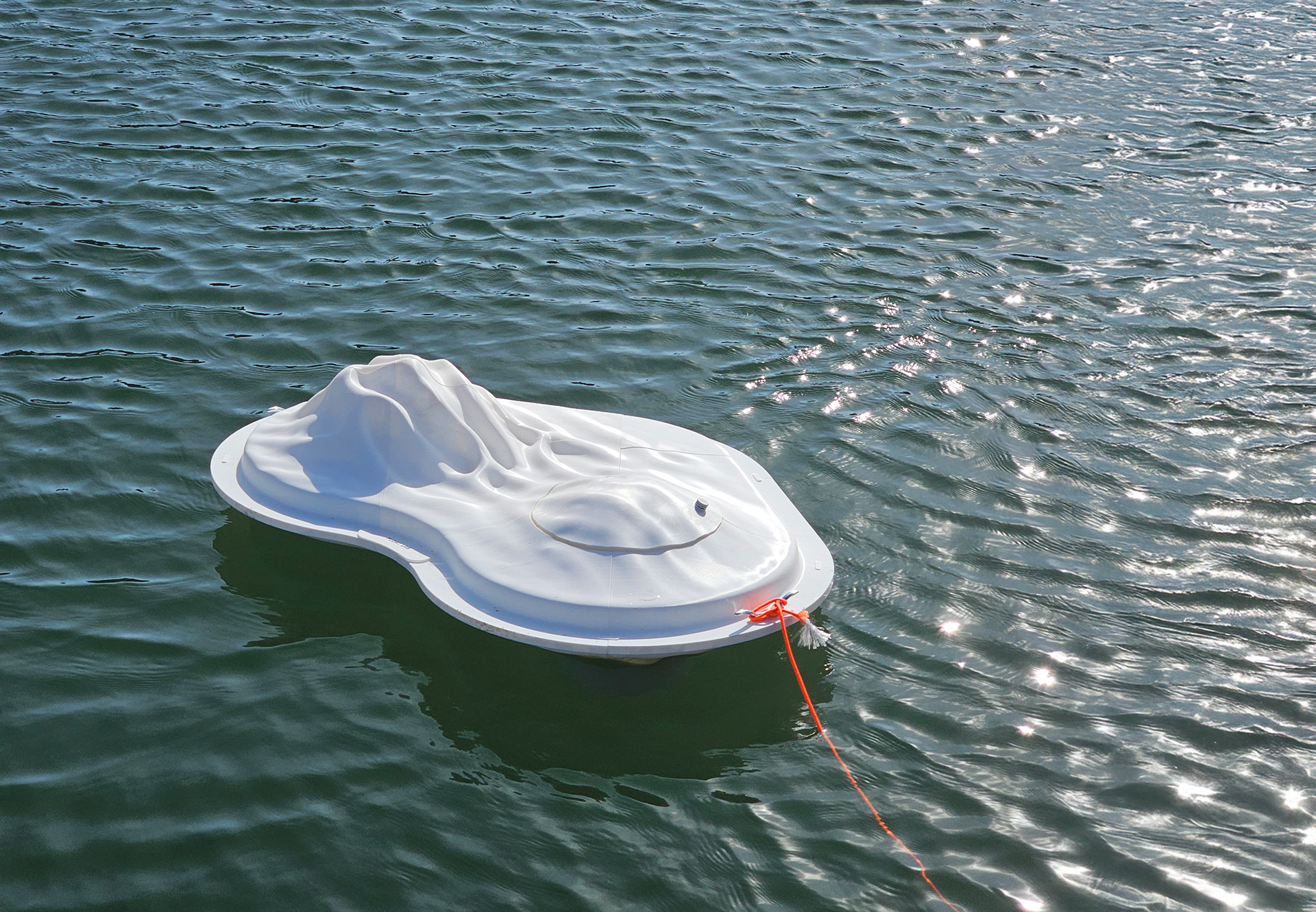
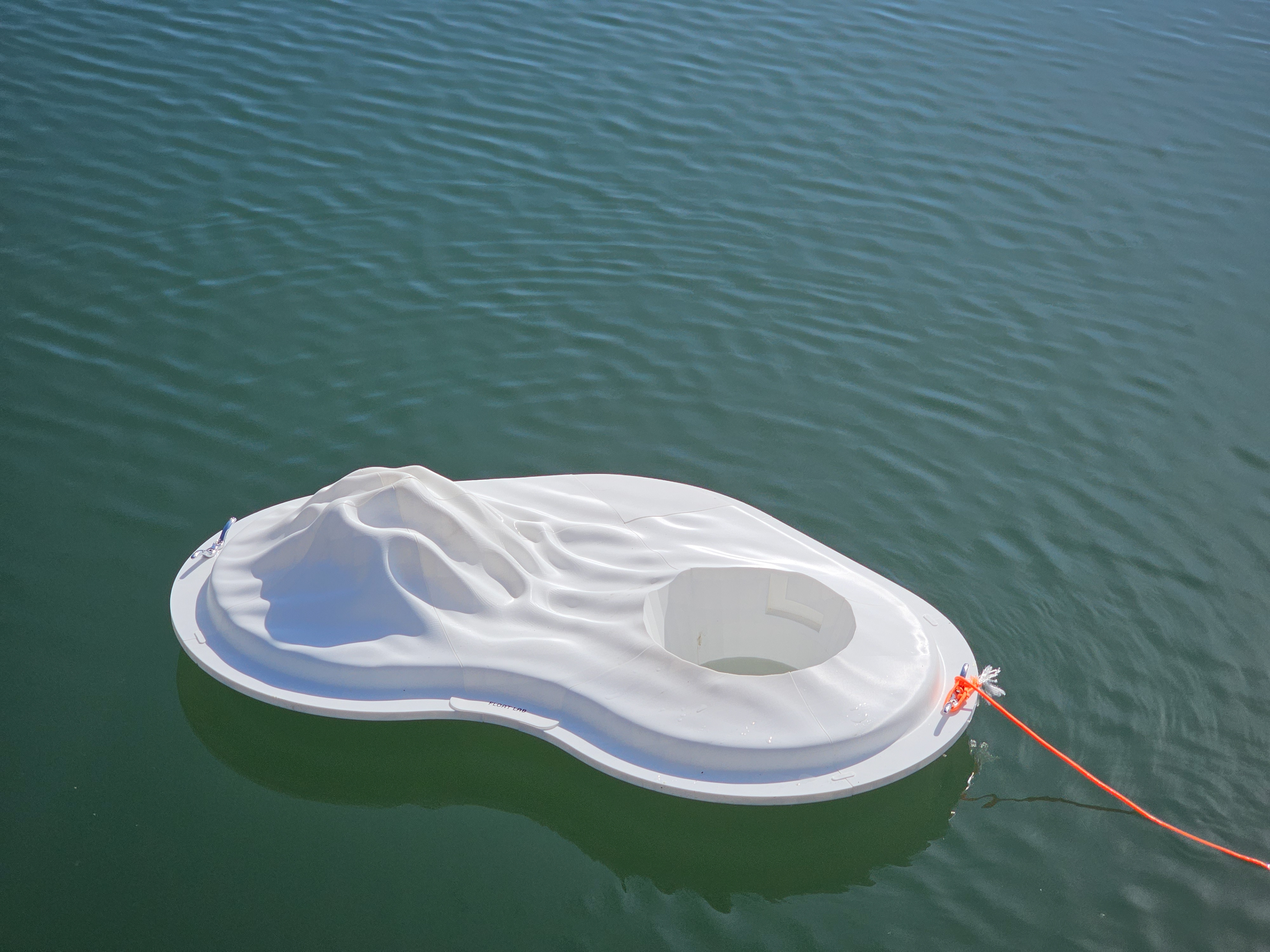
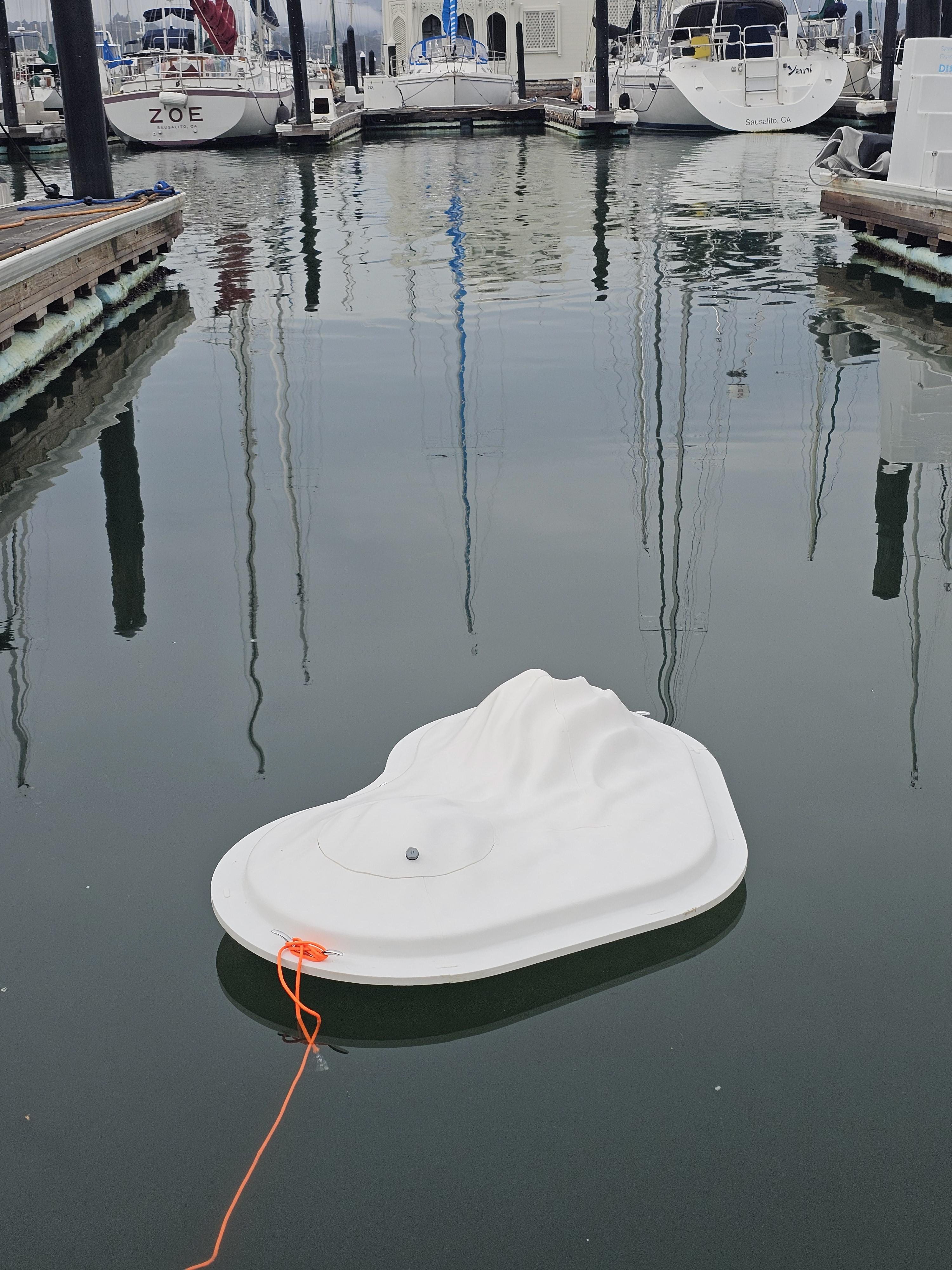
This collaborative practice moves beyond a single building to embrace the expanded field of architectural design capable of serving diverse local communities. It builds upon the award-winning Buoyant Ecologies Float Lab, a resilient floating structure that merged expertise in design, digital fabrication, and marine ecology. We prioritized an ethos of sustainability and innovation, that monitors ecological conditions in real time across diverse geographical areas, coexisting productively with its environment.
Inspired by marine organisms like the chambered nautilus, the mini–Float Lab ensures stability and wave resilience both above-water and underwater functionalities. Above water, a solar-powered system provides energy for the PlanktoScope and wireless data transmission. Below water, the buoy’s intake system carefully funnels plankton-rich water through the imaging chamber without harming organisms, embodying a more-than-human design ethos that considers the plankton’s well-being. All components are modular to allow easy repair, upgrades and experimentation, reinforcing an open-source and iterative design philosophy.
Fabrication Process:
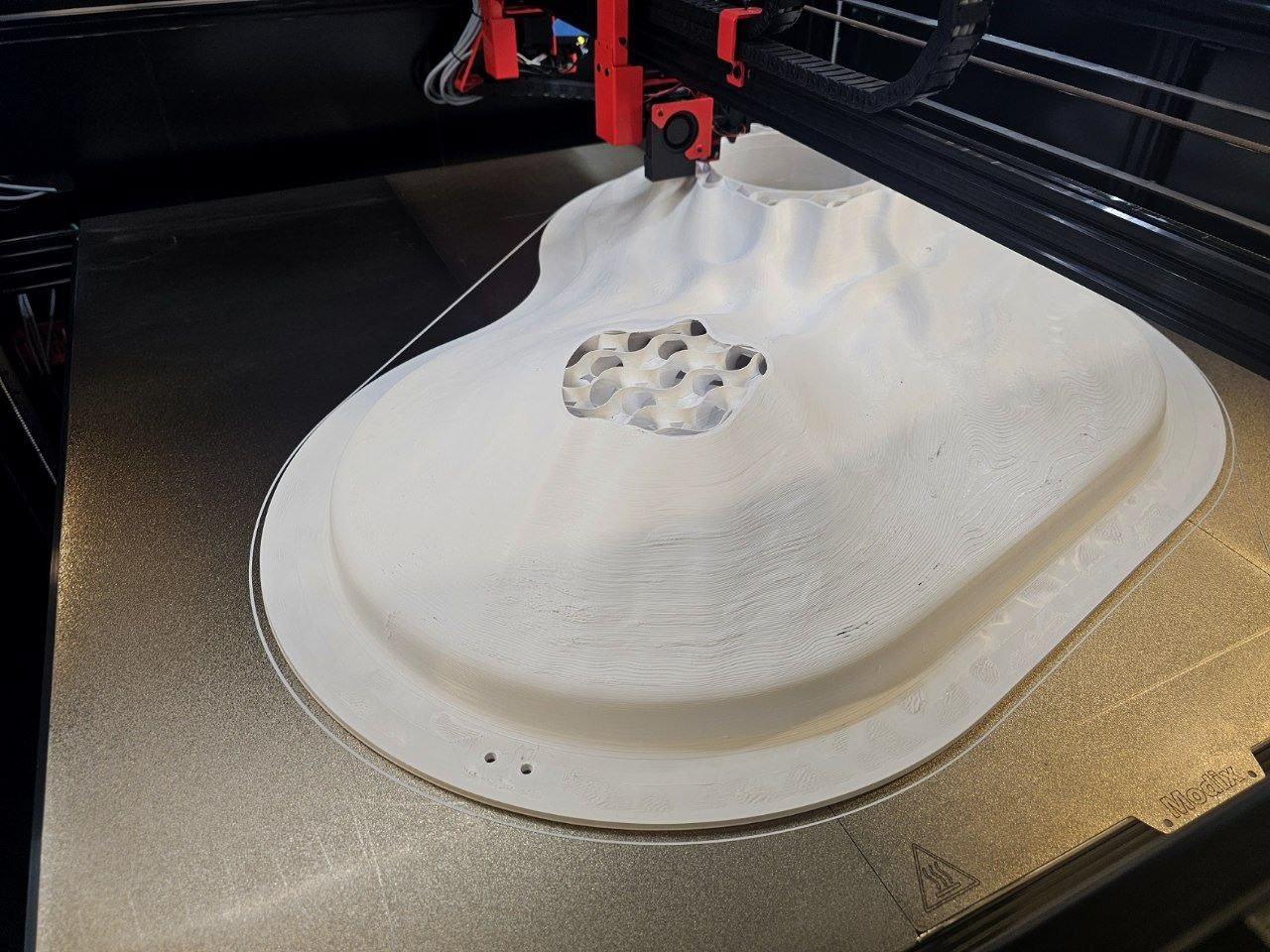
Since we wanted to Print in size of one meter, We first used Autodesk's Modix BIG-Meter large scale 3D printer.
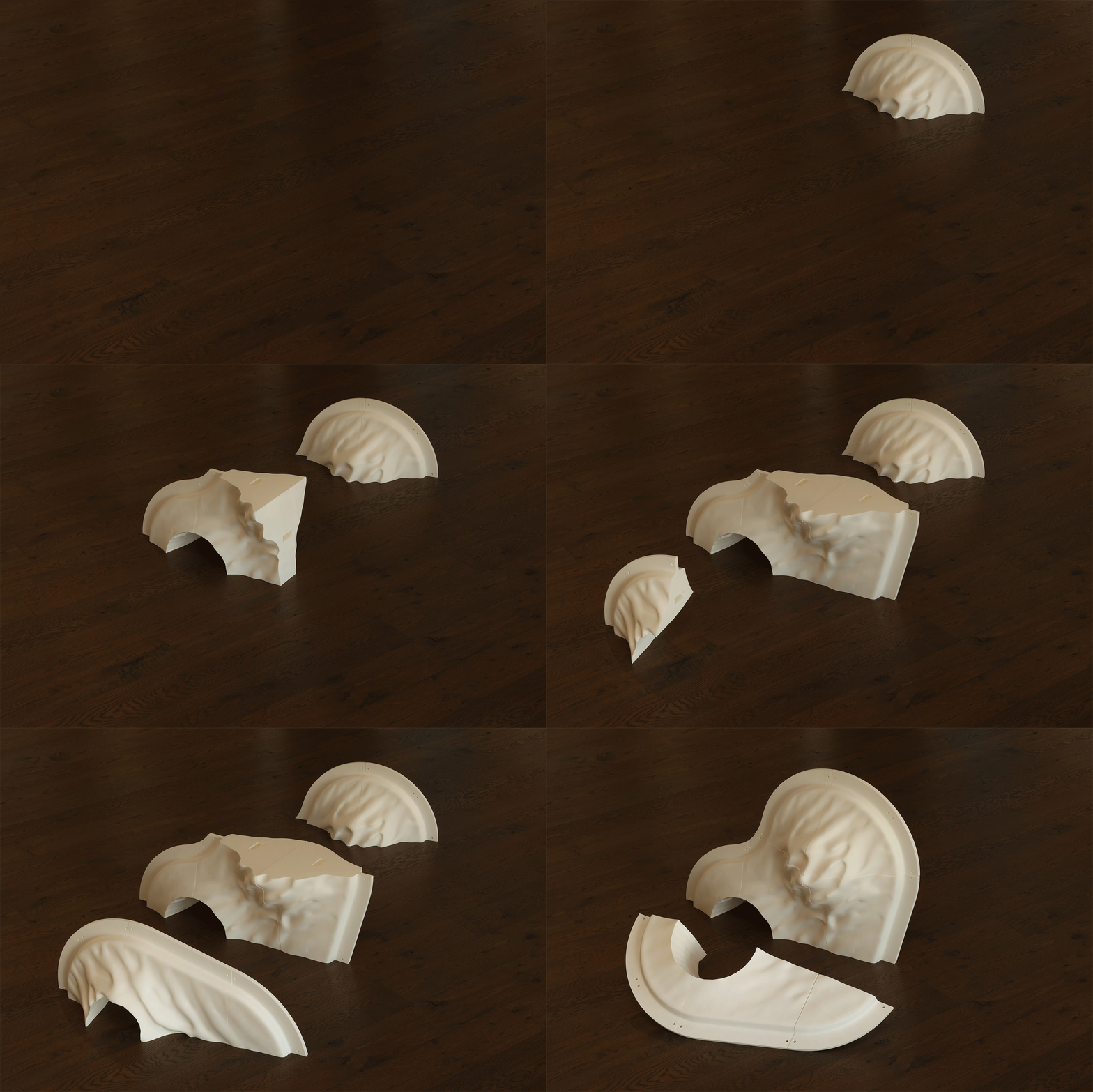
The idea was to print in two half and connect them together.
the result was quite well but not as smooth as we wanted. and had some failures.
the result was quite well but not as smooth as we wanted. and had some failures.
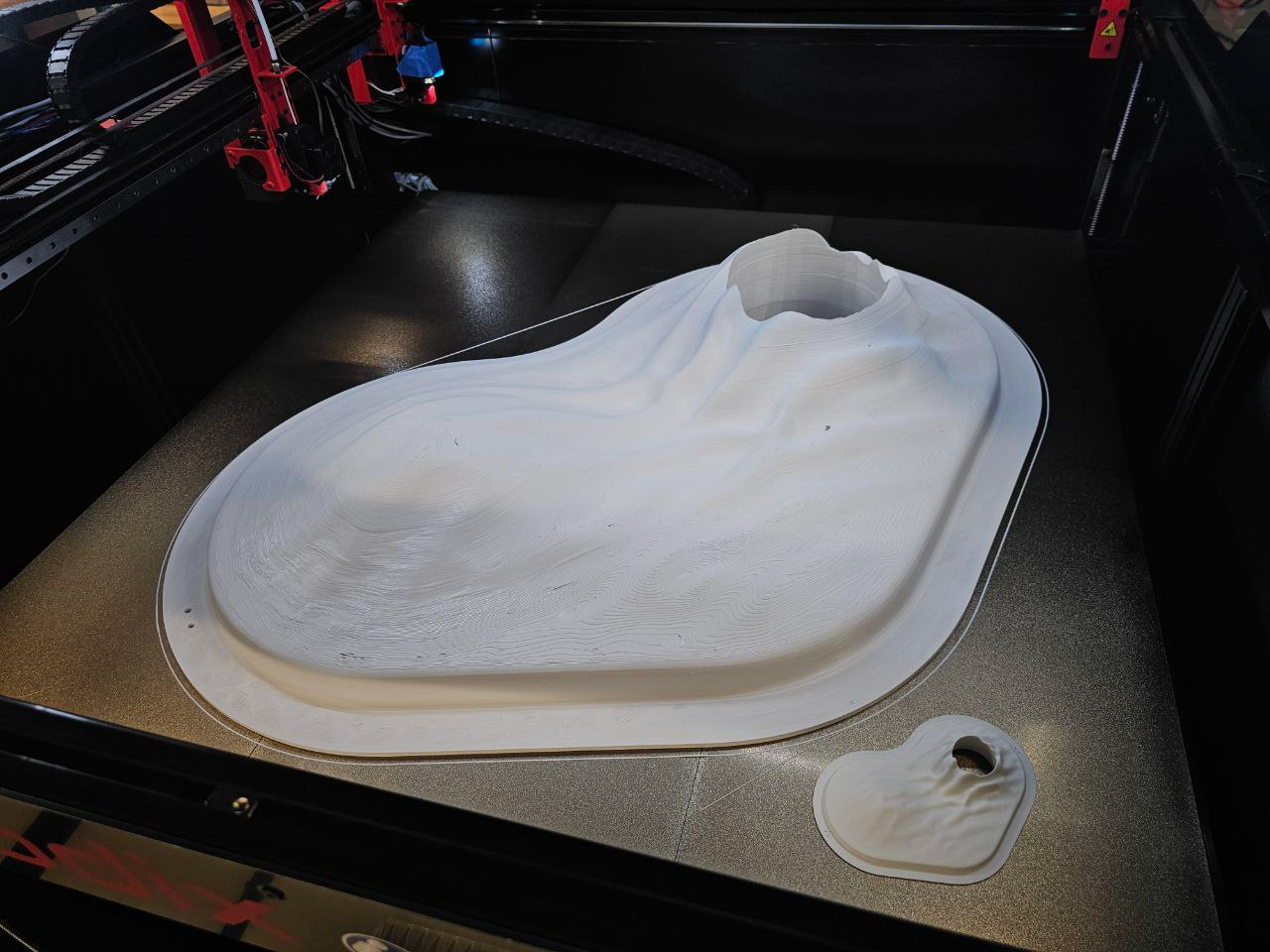
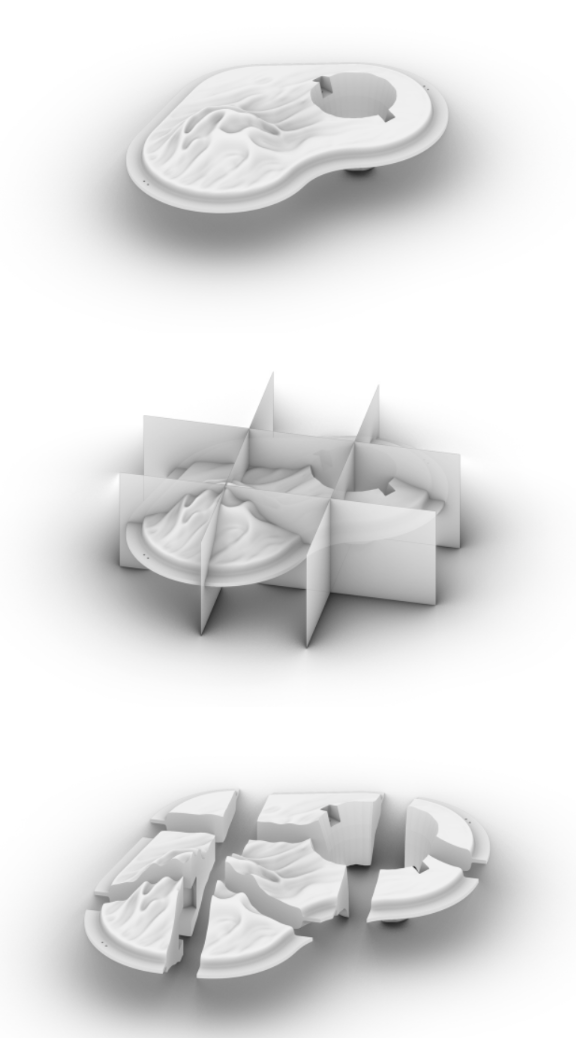
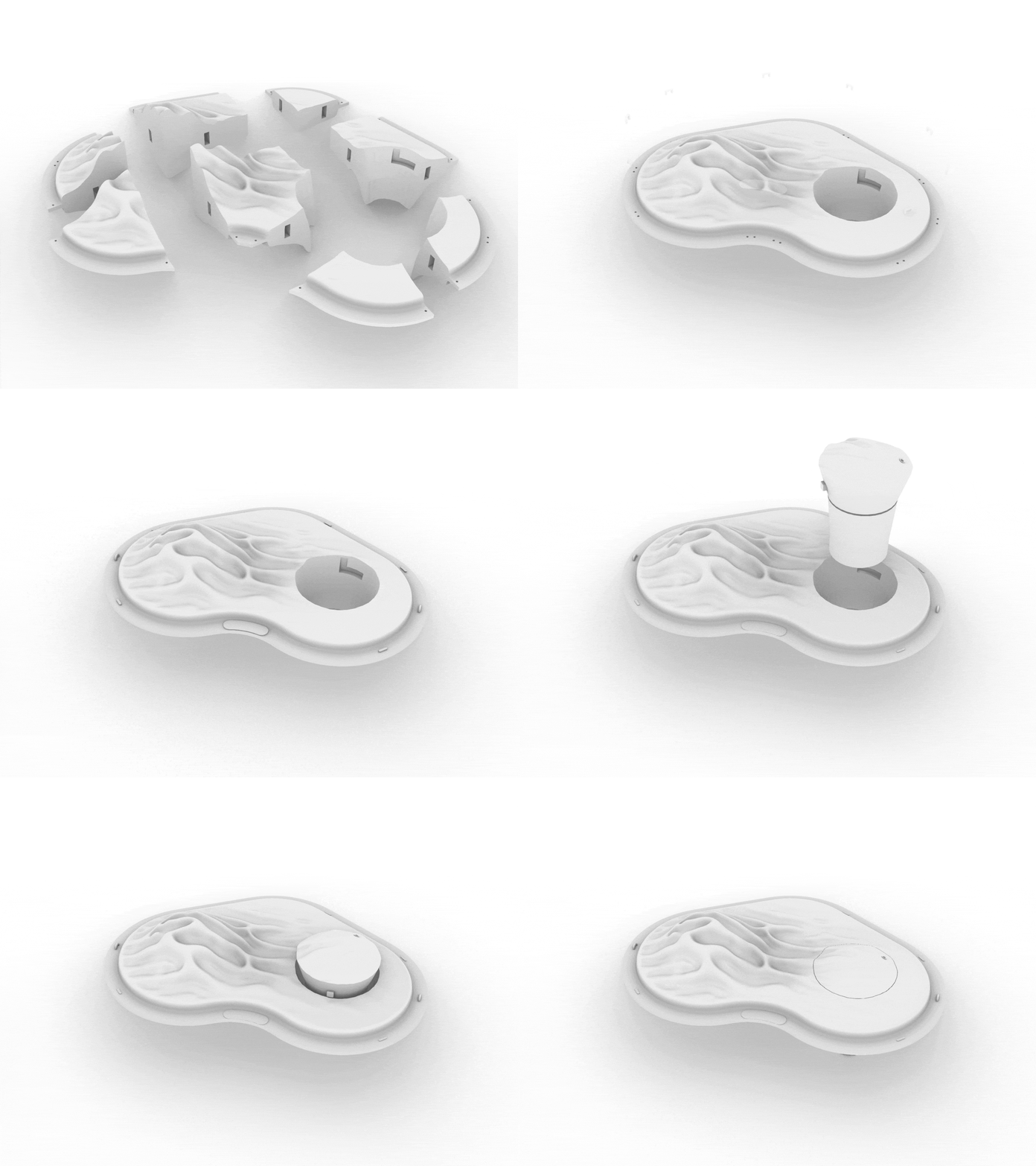
so we decided to move on to Bambu Lab H2D printers which has build volume of 325mm x 320mm x 325mm and print the main form in 8 parts and assemble them.