BioDesign Challenge 2024 Project:
“Transforming eggshells into modular bio-building systems”
“Transforming eggshells into modular bio-building systems”
Team: Ali Farajmandi (Advisor), Negar Hosseini, Miti Mehta, Kianoush Hamedi, Jesus Guillermo Macias Franco, Alex Hong, Claire Kokontis, Camille Moore, Anastasia Muliana
Outstanding Science Award winner
Outstanding Science Award winner
https://www.biodesignchallenge.org/cca-ucsf-2024
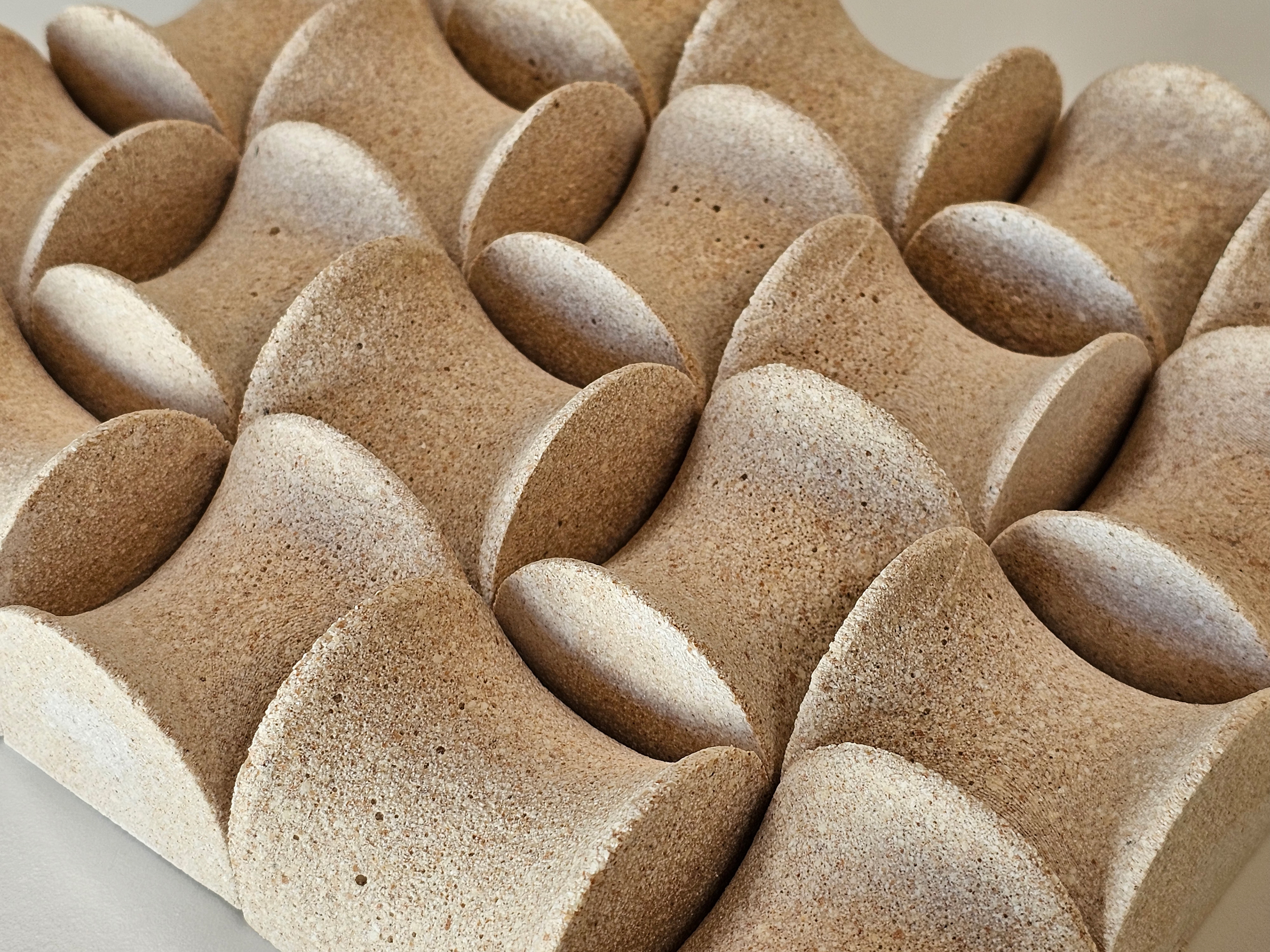
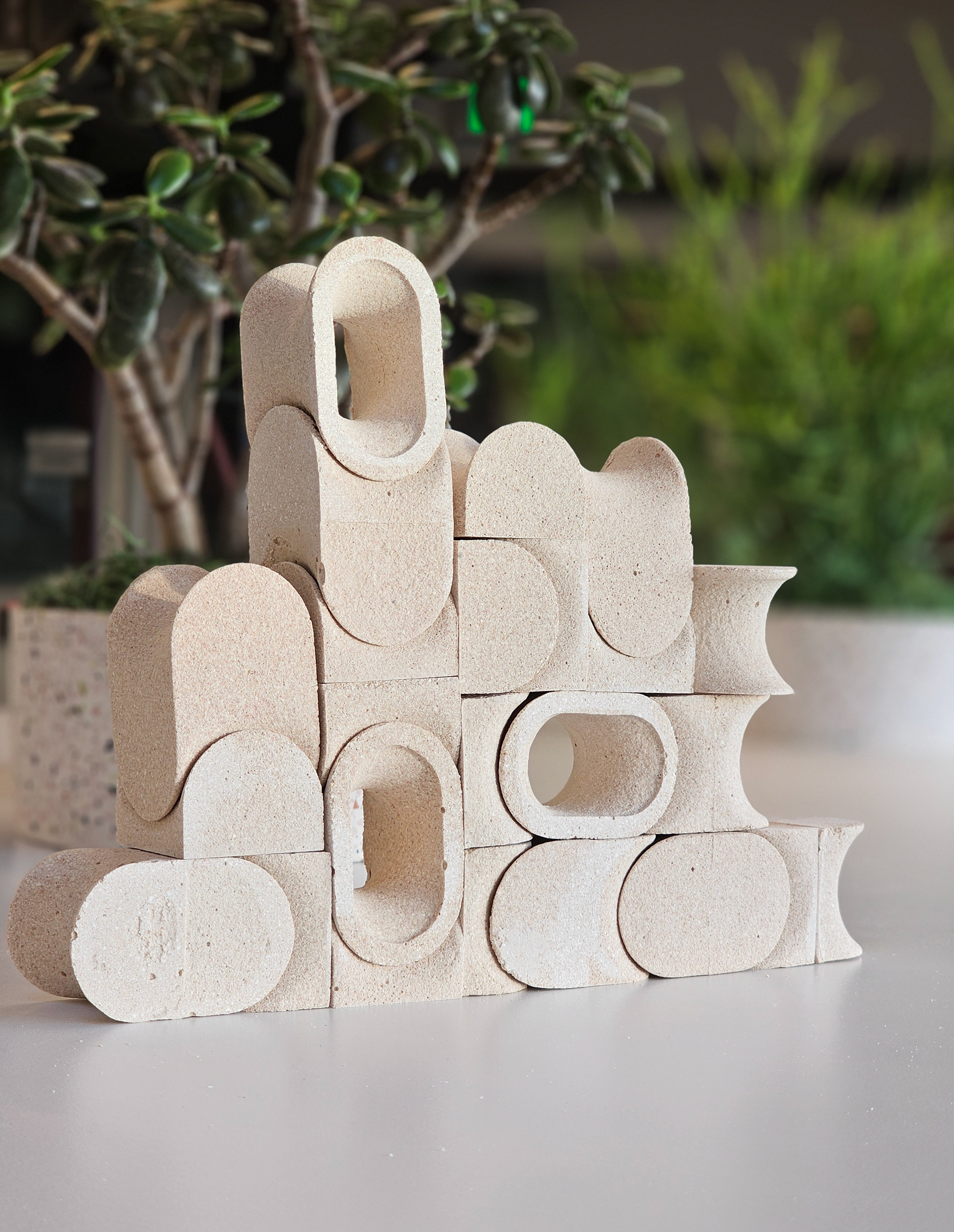
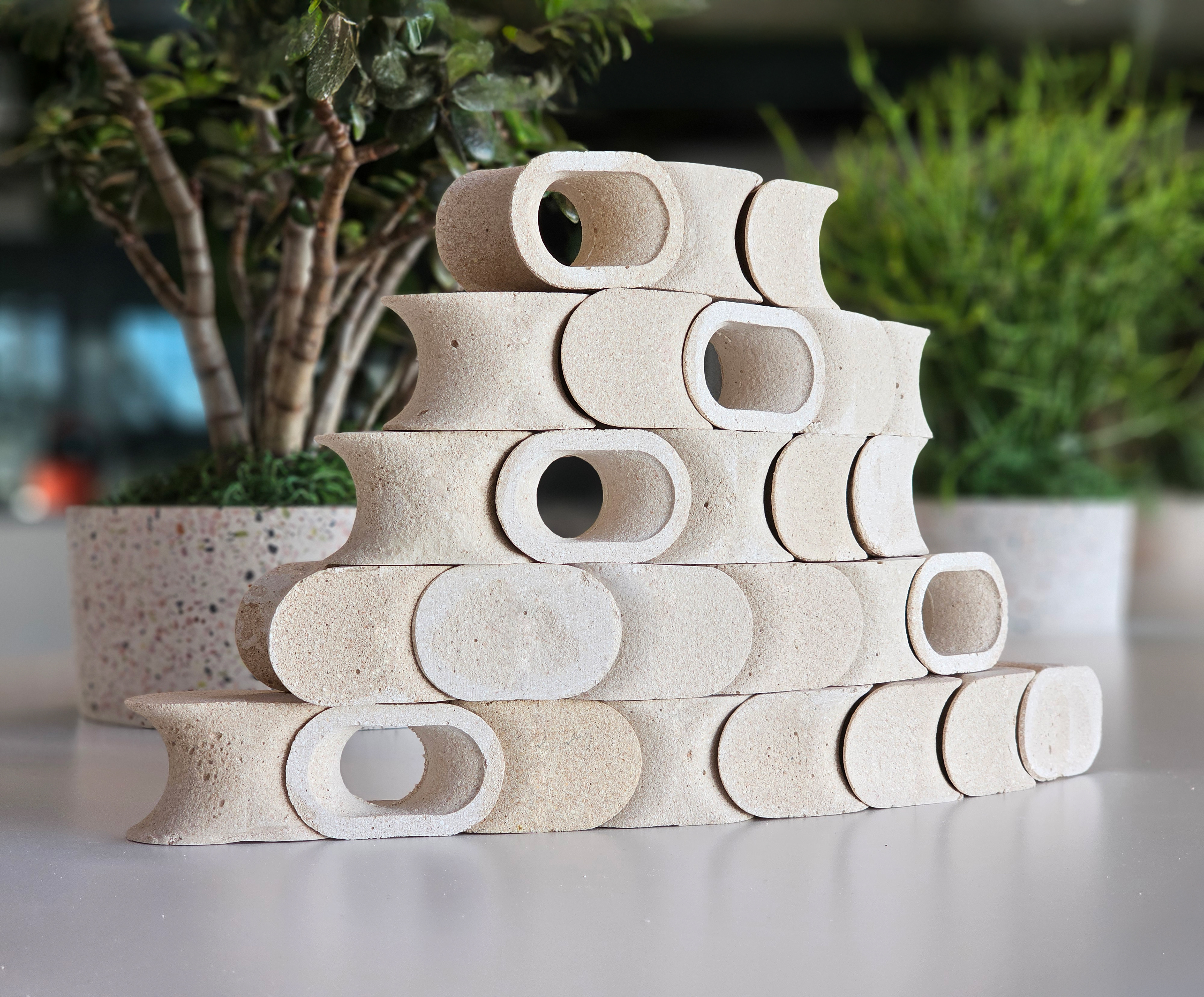
This project transforms eggshell & crustacean waste into sustainable architectural materials. By combining finely ground shells with natural binders and enhancing crystallization using Bacillus subtilis, we created a lightweight, fast-drying material with significantly improved strength. Modular interlocking geometries inspired by soft cellular structures enabled scalable, mold-based fabrication. The resulting prototypes demonstrate how biomaterials and geometry can produce adaptable, low-carbon components for pavers, panels, and small architectural systems.
Research Focus
Developed a bio-building material using eggshell and crustacean waste to reduce reliance on cement and other carbon-intensive materials.
Addressed construction-industry emissions by transforming urban food waste into low-carbon architectural components.
Developed a bio-building material using eggshell and crustacean waste to reduce reliance on cement and other carbon-intensive materials.
Addressed construction-industry emissions by transforming urban food waste into low-carbon architectural components.
Material Development
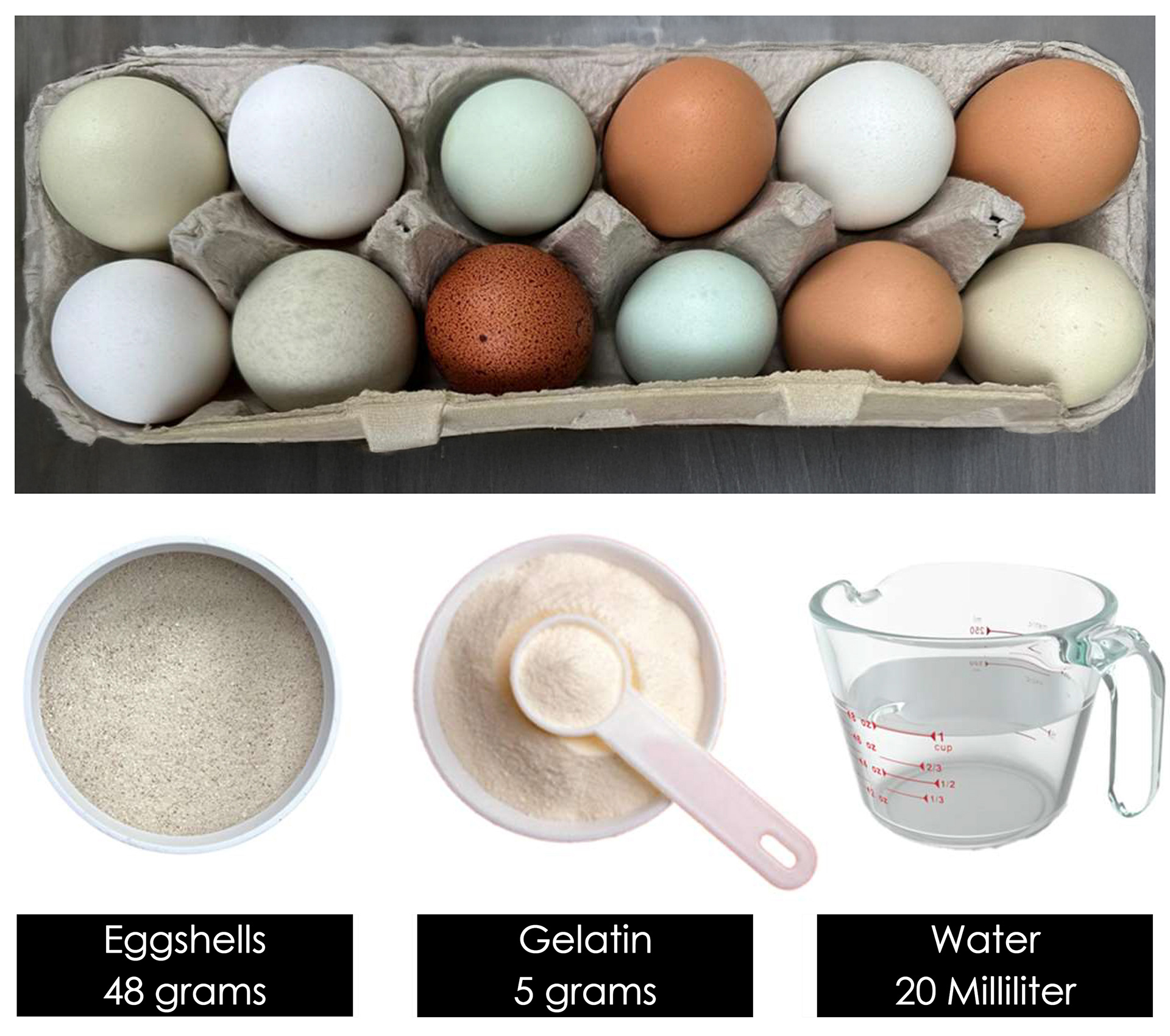
Created a strong, lightweight composite from finely ground shells, water, and gelatine, refined through iterative testing.
SEM imaging revealed a porous calcium-carbonate matrix, guiding strategies for strengthening & densification.
Created a strong, lightweight composite from finely ground shells, water, and gelatine, refined through iterative testing.
SEM imaging revealed a porous calcium-carbonate matrix, guiding strategies for strengthening & densification.
Biological Enhancement
Incorporated Bacillus subtilis to promote in-material crystallization, filling micro-pores & cracks.
Achieved a 3× increase in compressive strength (from ~5 MPa to ~16 MPa).
Adhesive Research
Investigated chitosan,derived from crustacean shell chitin,as a bio-adhesive.
Chitosan-gelatine blends significantly improved bonding in modular assemblies, especially at curved interfaces.
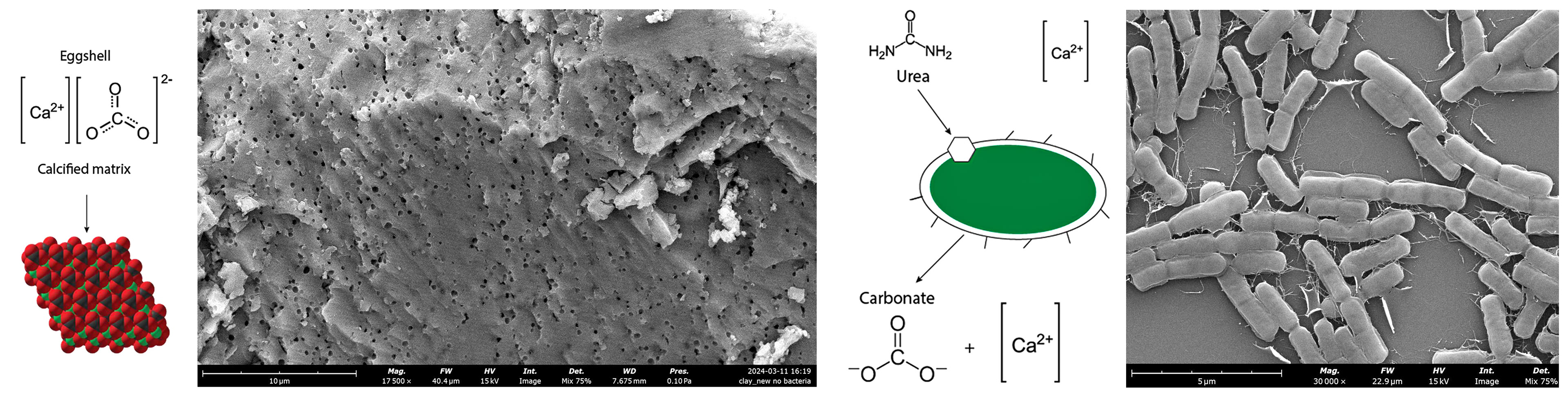
(Left) Eggshell mixture 17500x magnification SEM image showing a porous matrix of Calcium Carbonate. (Right) Bacillus subtilis bacteria 30000x magnification SEM image.
Geometry:
Computational Geometry:
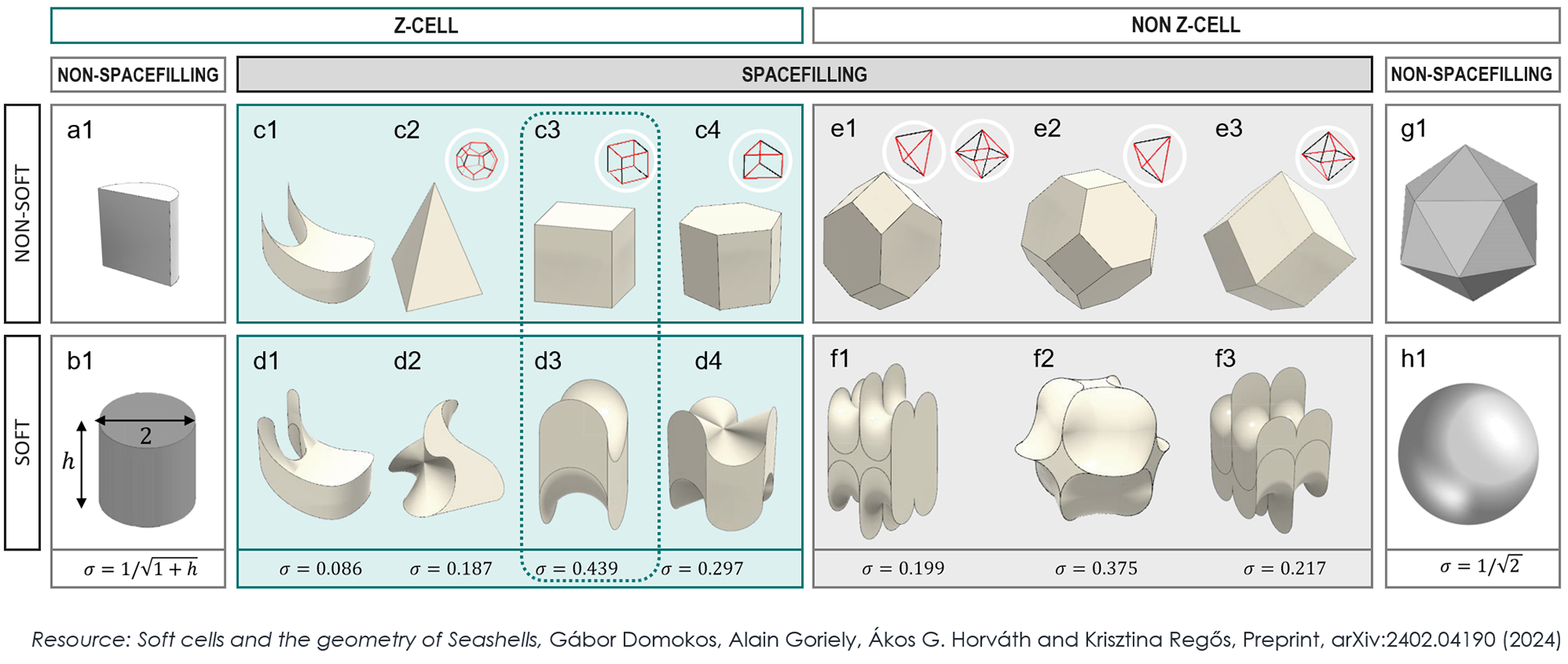
Explored monohedral soft z-cell geometries inspired by the mathematics of seashell growth (Domokos et al., 2024).
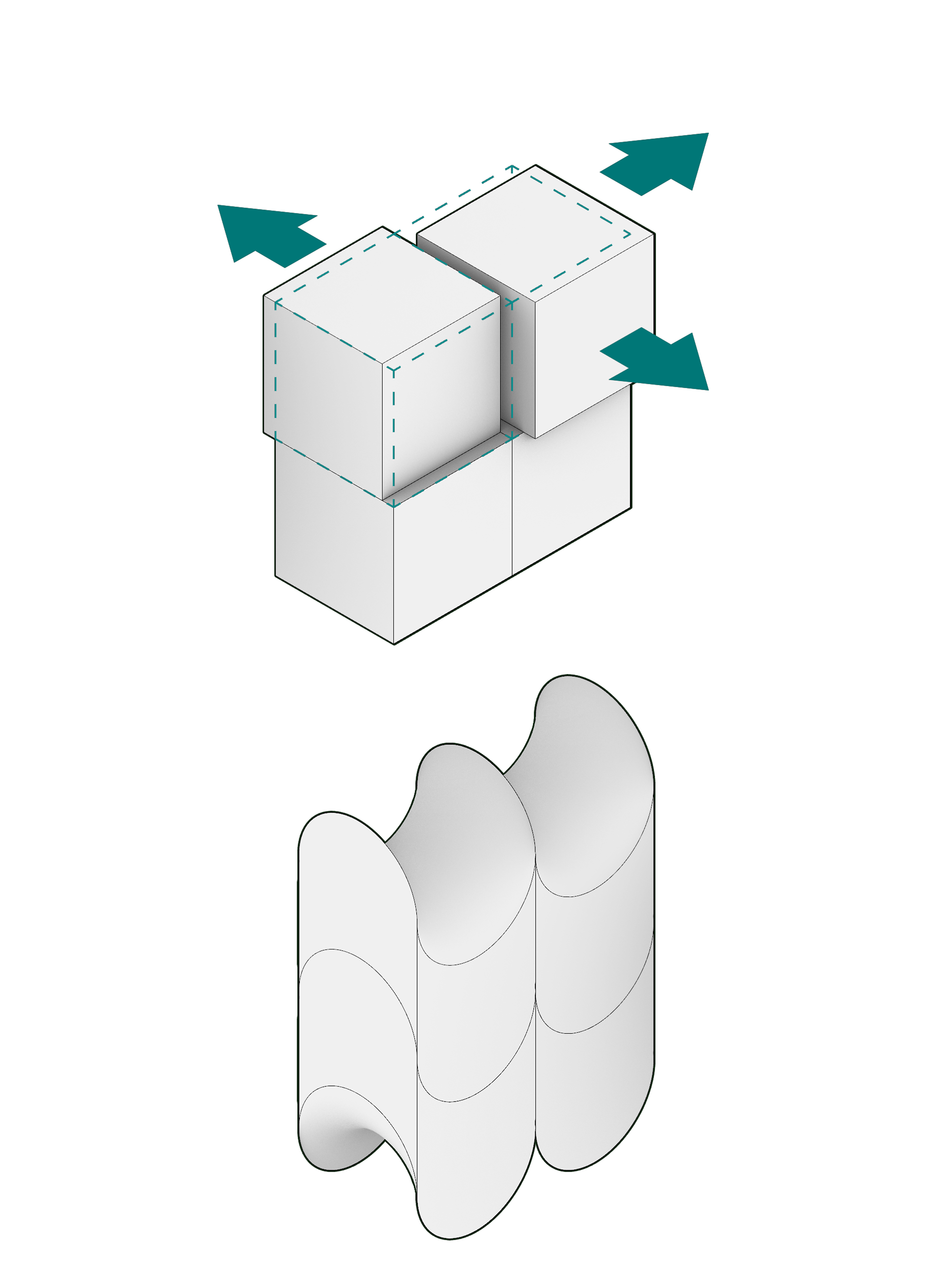
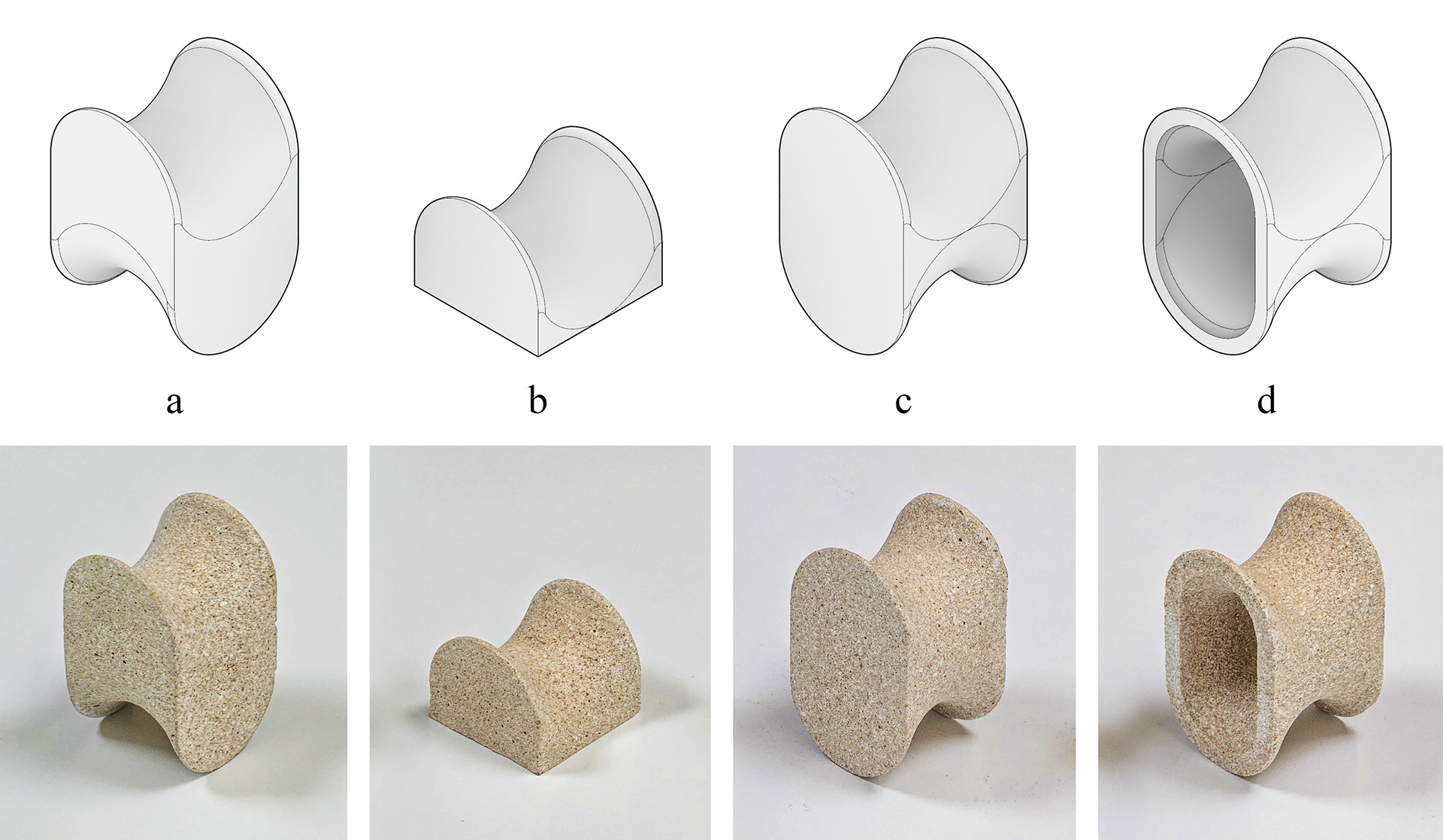
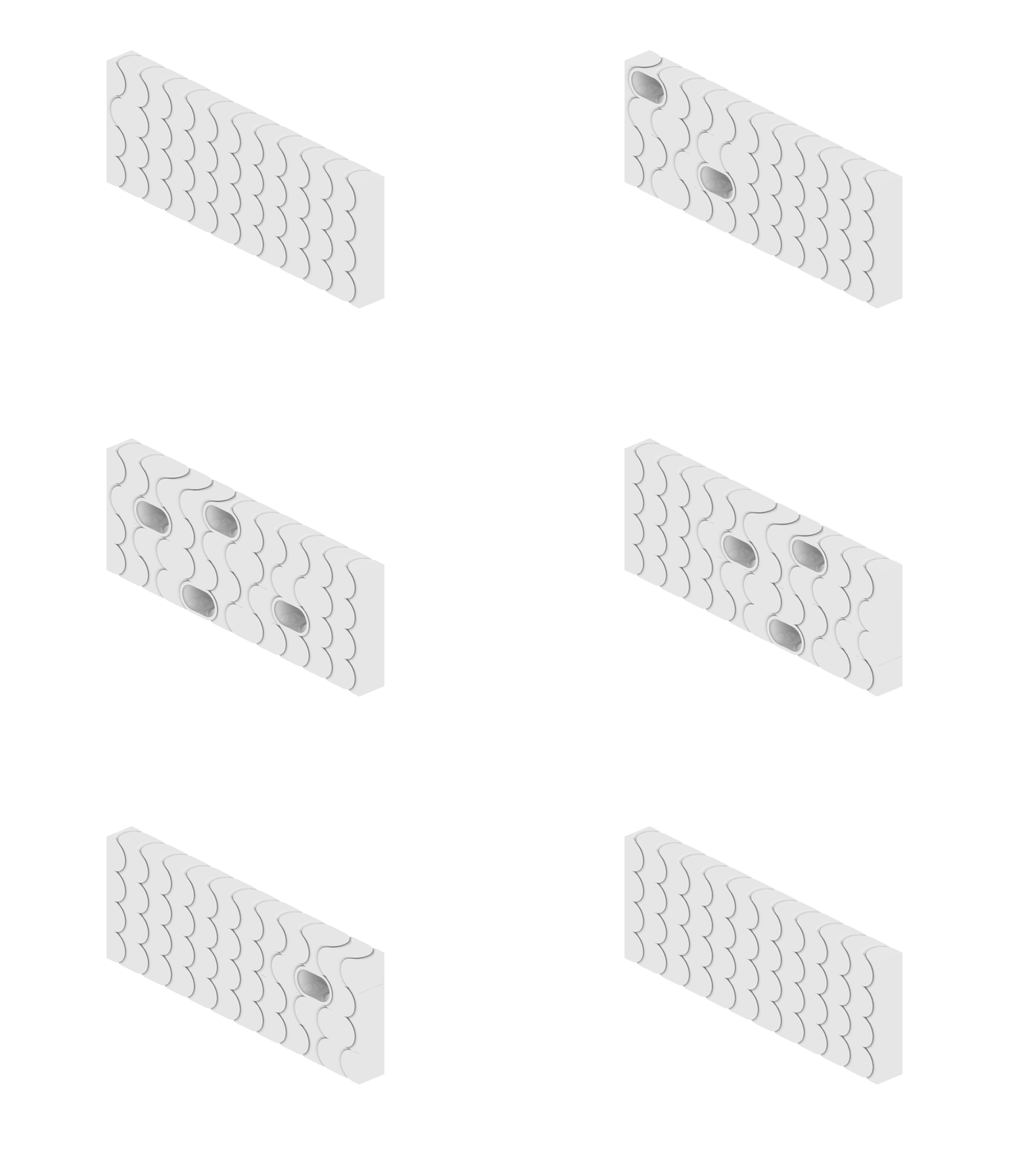
Designed four new modules derived from the d3 soft cell:
a. A fabrication-optimised d3 module.
b. A half module, derived by cutting the geometry in half.
c. A symmetrical module, formed by mirroring the half module.
d. A hollow module created by adding thickness to the symmetrical module.
Explored monohedral soft z-cell geometries inspired by the mathematics of seashell growth (Domokos et al., 2024).
Designed four new modules derived from the d3 soft cell:
a. A fabrication-optimised d3 module.
b. A half module, derived by cutting the geometry in half.
c. A symmetrical module, formed by mirroring the half module.
d. A hollow module created by adding thickness to the symmetrical module.
Refining edges to optimize it for fabrication and also add flexibility to it's movement:

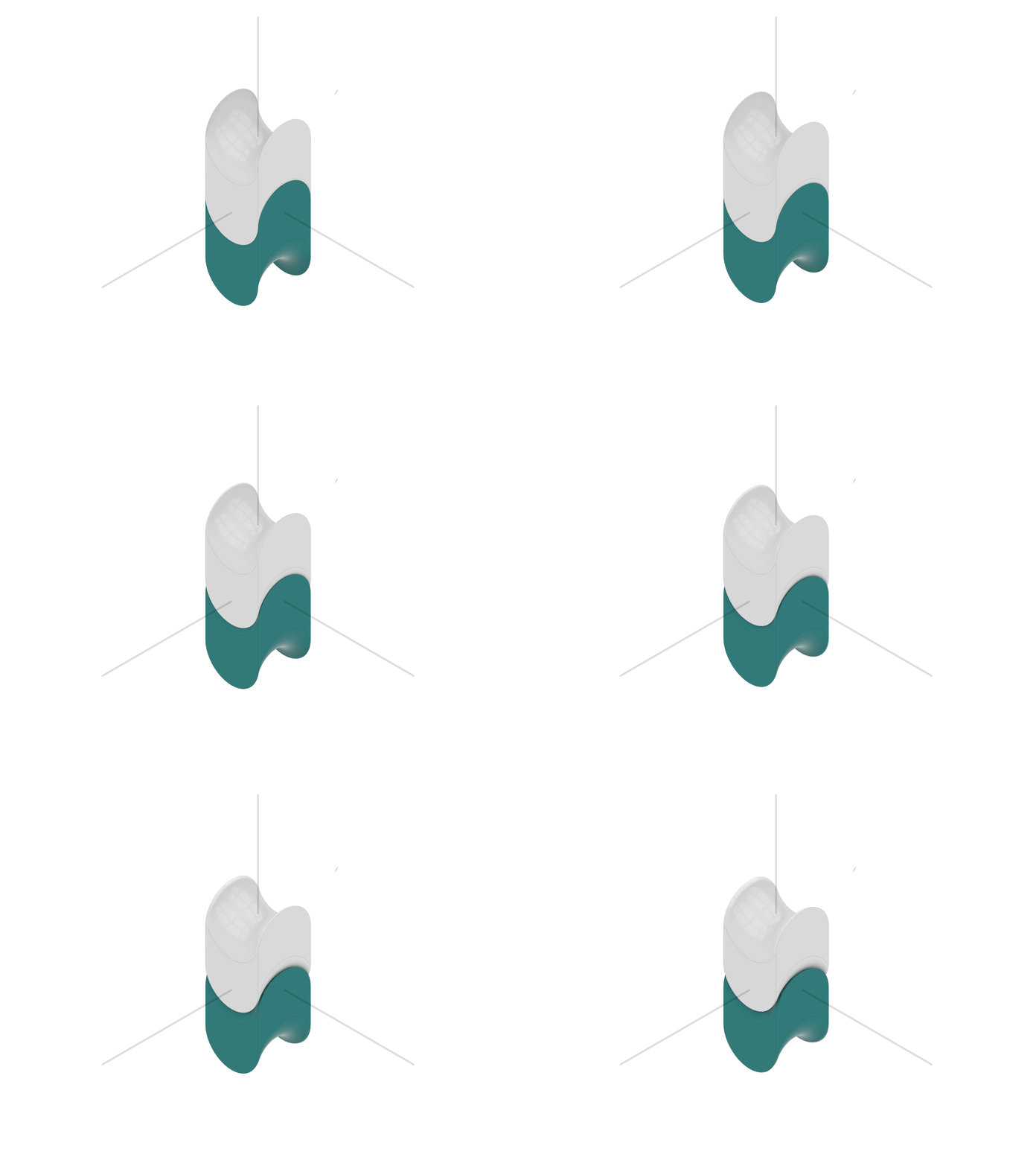
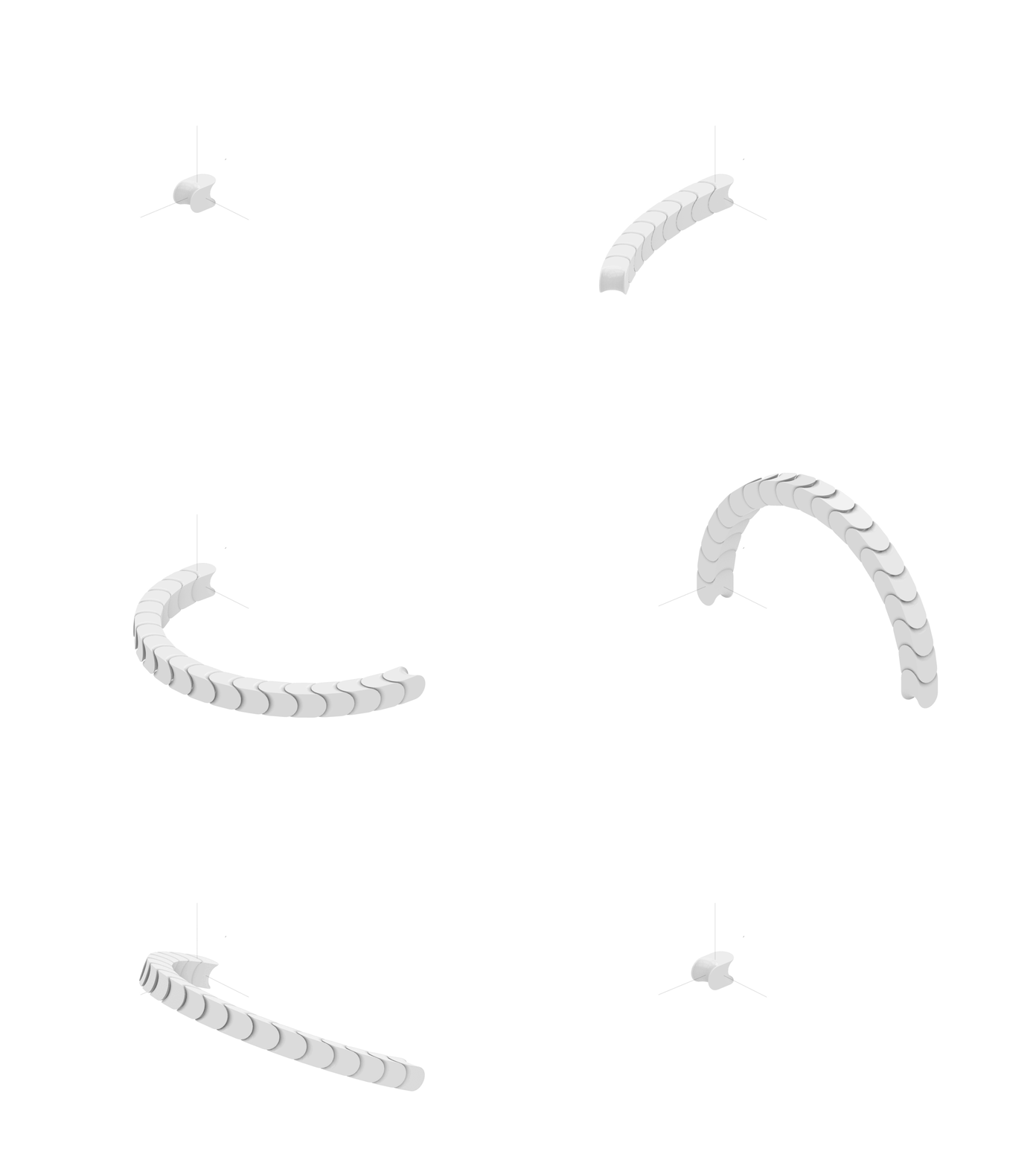
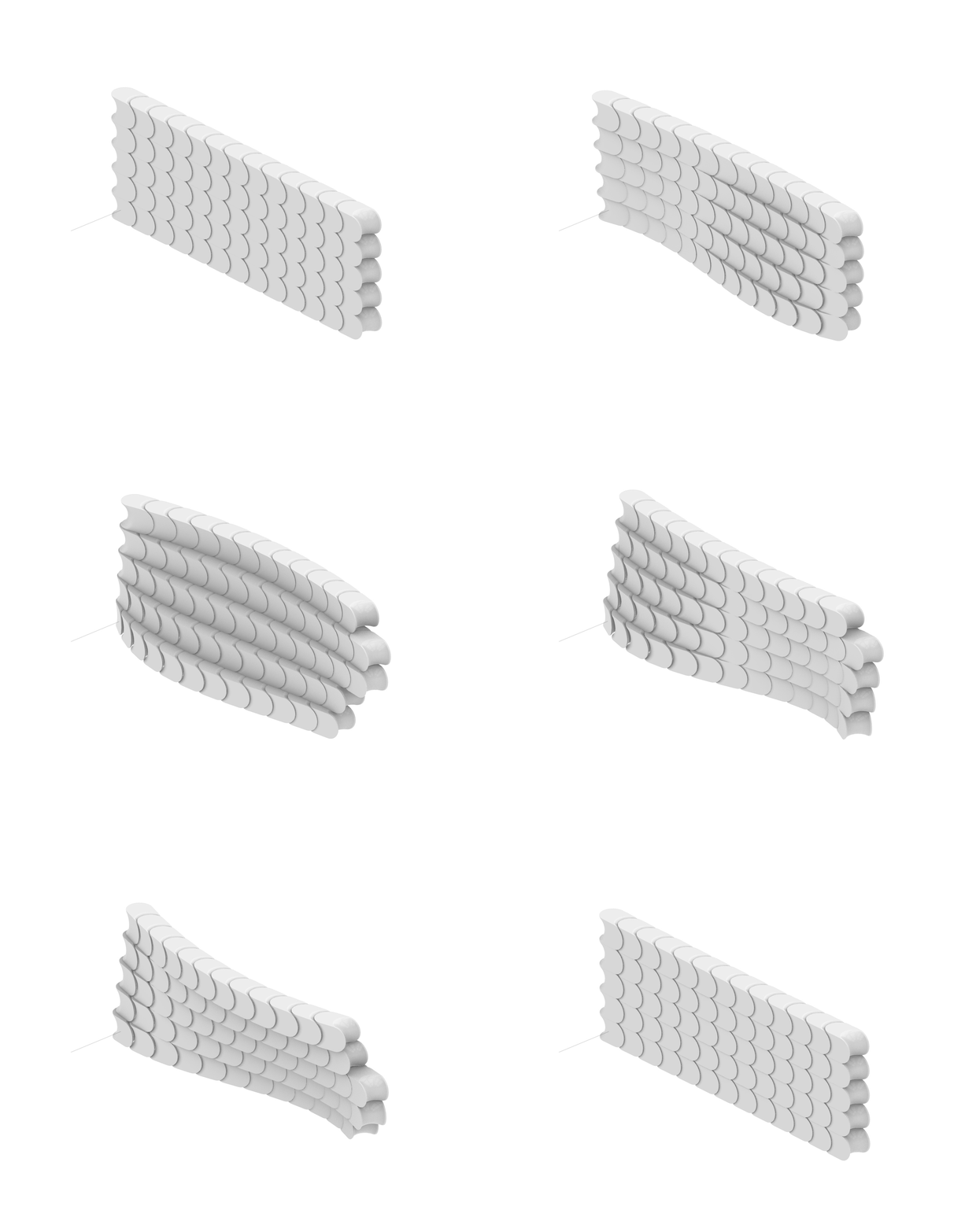
Simulations:
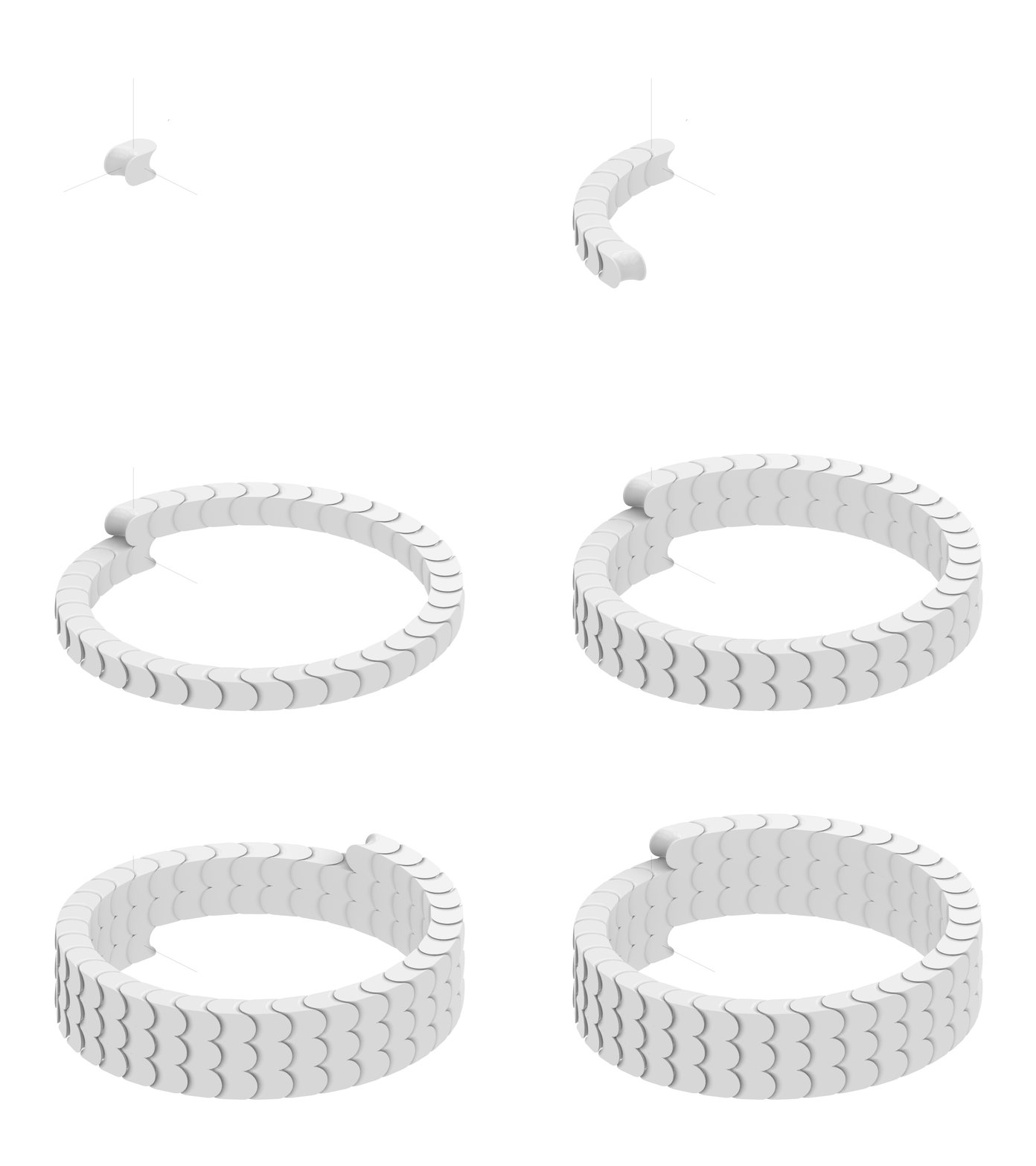
Fabrication Process:
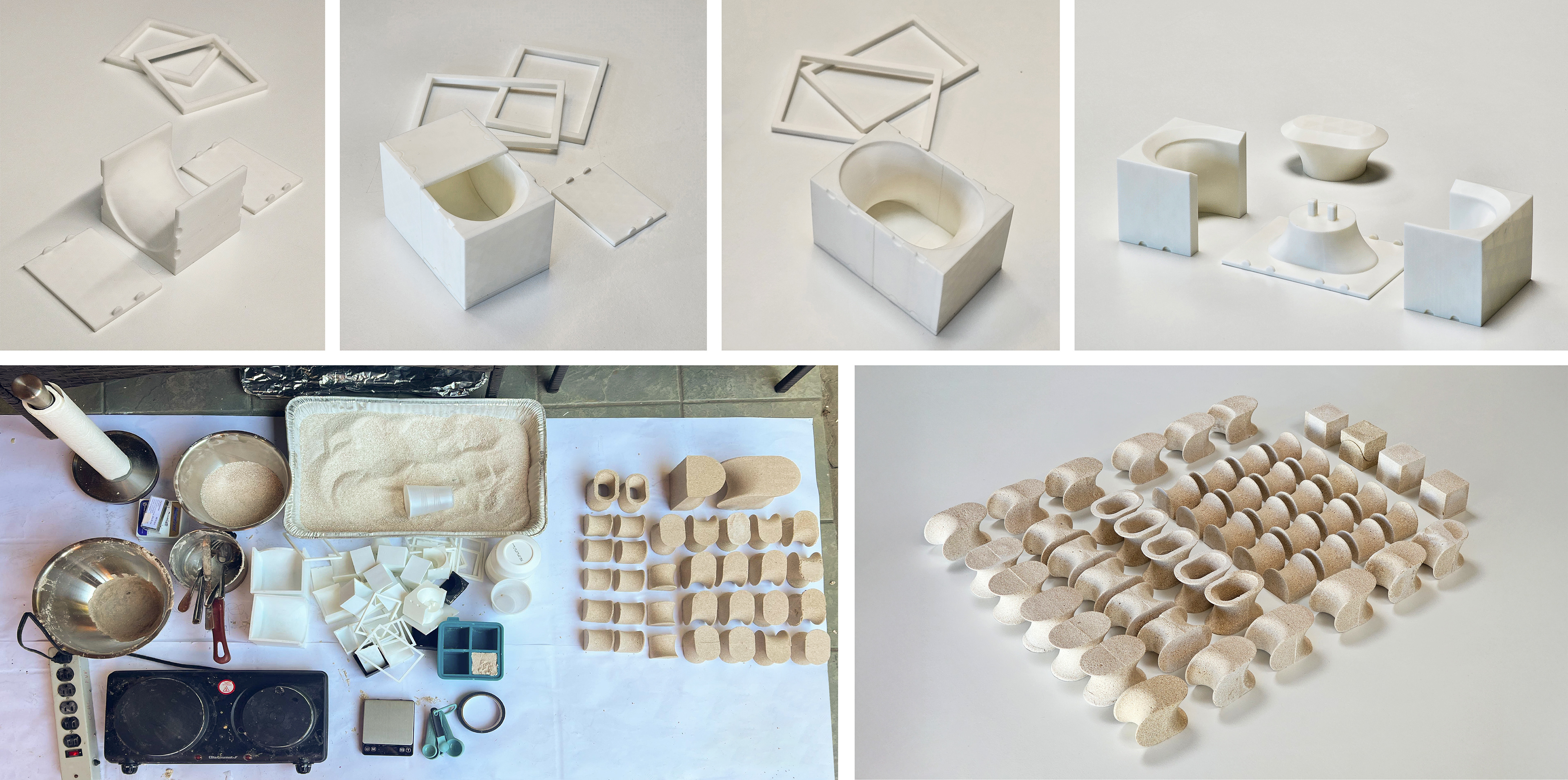
Due to the unique material properties and geometry, direct robotic arm printing proved impractical. Instead, we considered creating a mold, exploring 3 potential approaches:
1. Silicone mold for flexibility and ease of release.
2. 3D-printed TPU mold as a flexible negative form of the geometry.
3.Collapsible multi-piece mold, allowing safe extraction of the cast blocks and ensuring smooth surfaces
Due to the unique material properties and geometry, direct robotic arm printing proved impractical. Instead, we considered creating a mold, exploring 3 potential approaches:
1. Silicone mold for flexibility and ease of release.
2. 3D-printed TPU mold as a flexible negative form of the geometry.
3.Collapsible multi-piece mold, allowing safe extraction of the cast blocks and ensuring smooth surfaces