BioDesign Challenge 2025 Project:
“A Living, Citizen-Led System for Coastal Resilience”
“A Living, Citizen-Led System for Coastal Resilience”
Instructors : Margaret Ikeda, Evan Jones, Dr. Dyche Mullins, Dr. Negar Kalantar
Team: Ali Farajmandi (Advisor), Yna Bariring, Alexandra Huerta, Asa Kalish, Austin Graham, Ashley Lasko, Aishath Leesha Abdulla, Hassan Haleem
Outstanding Field Research Award winnerhttps://www.biodesignchallenge.org/cca-arch-ucsf-maldives-2025
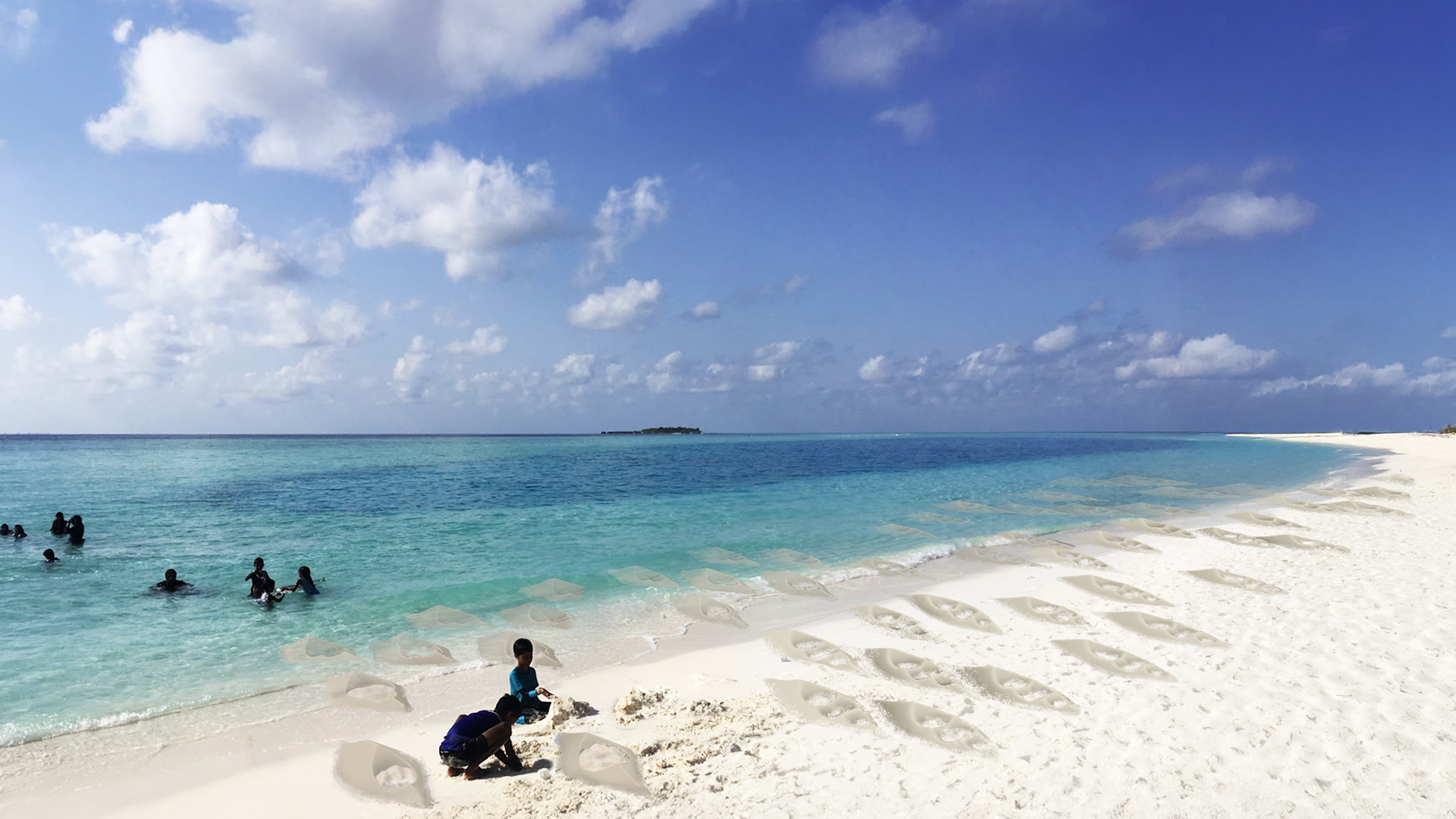
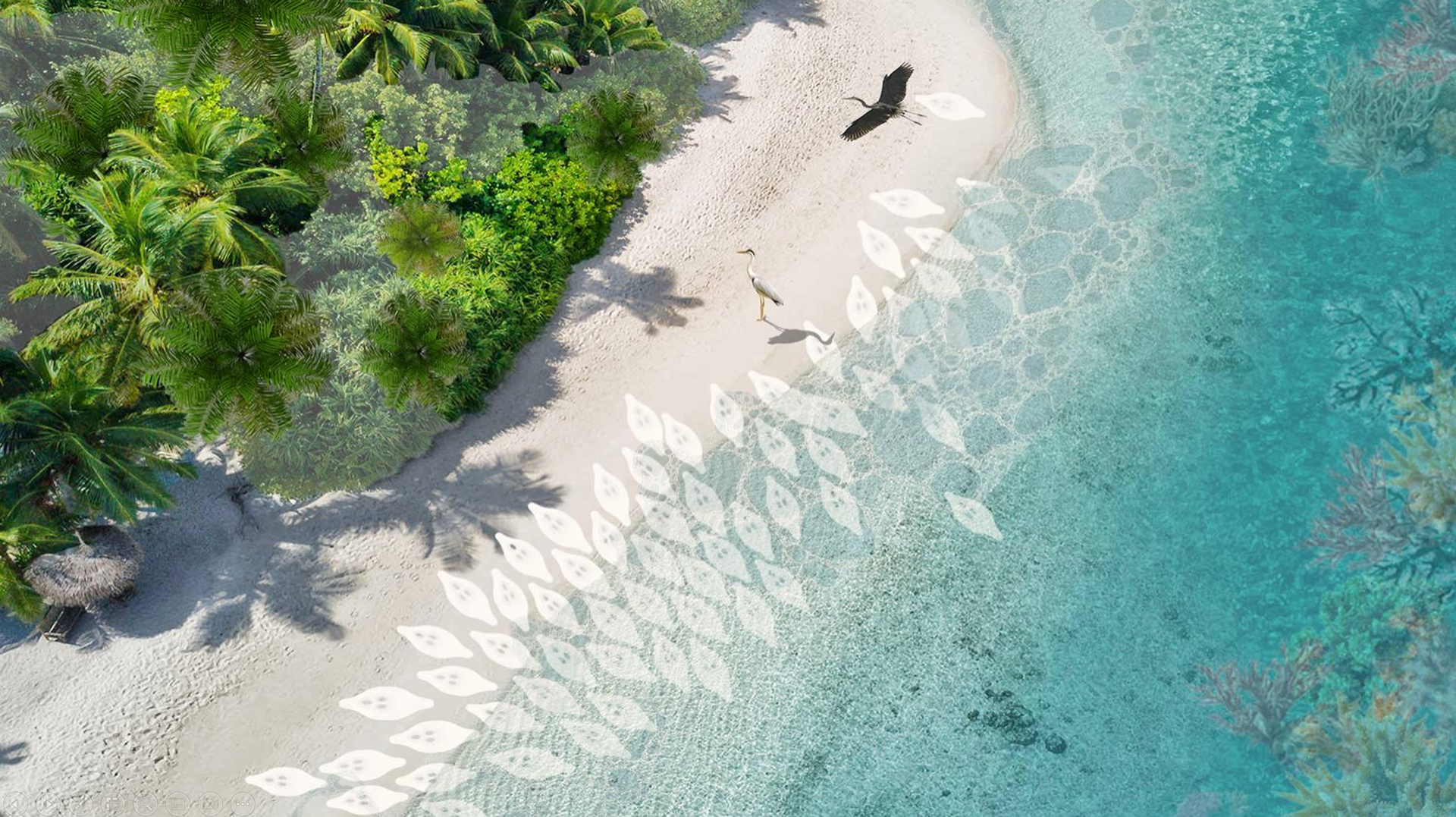
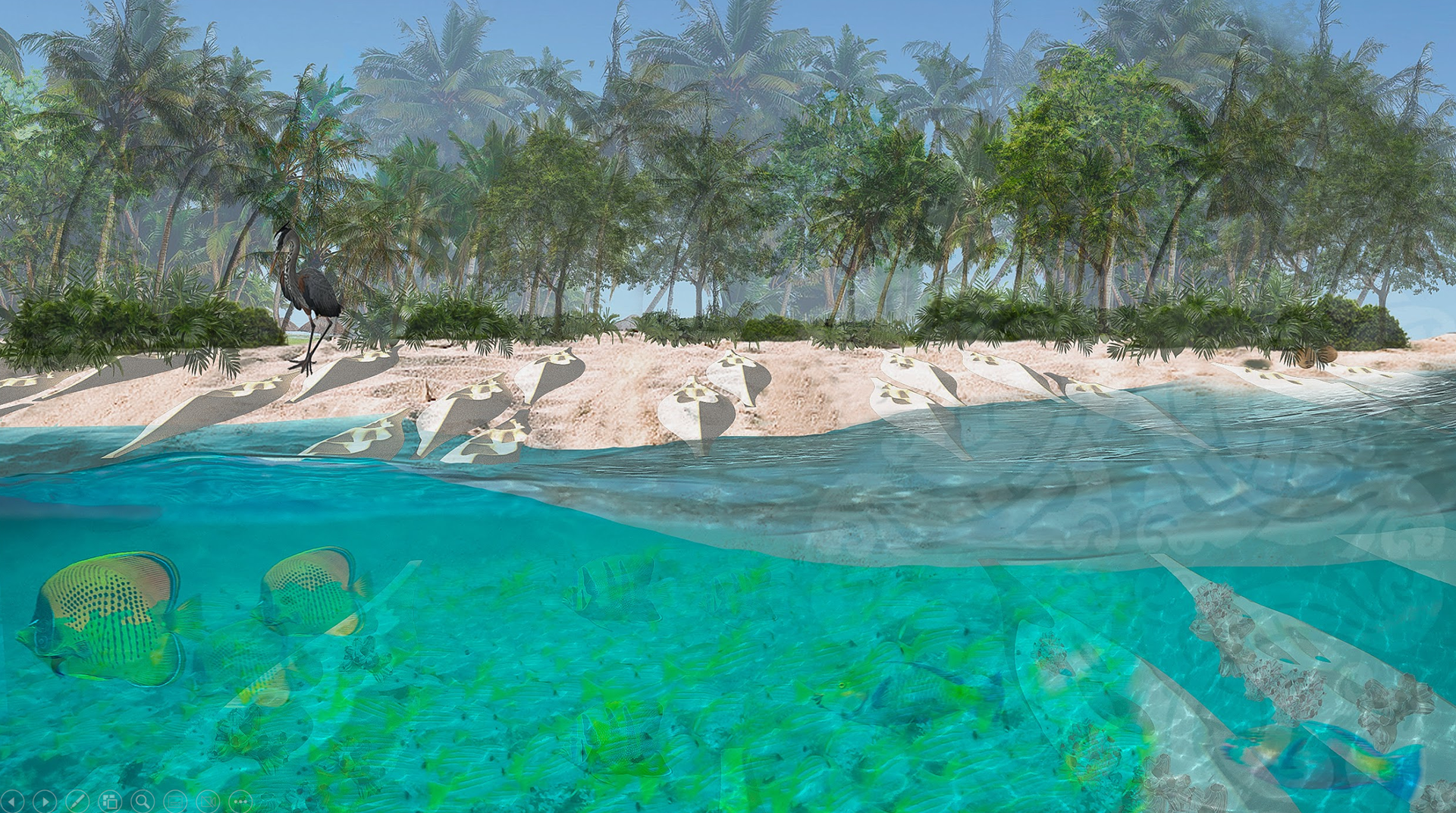
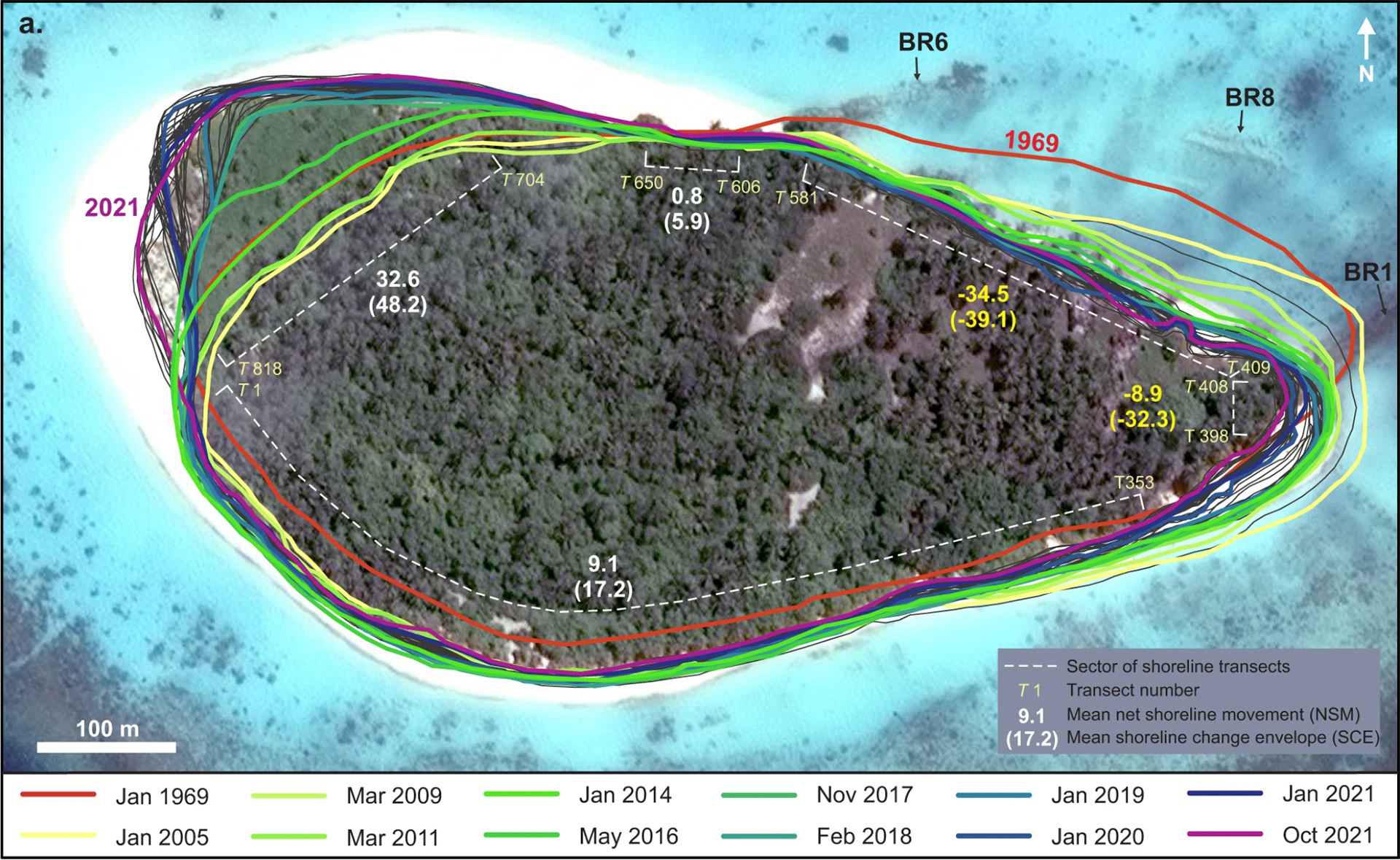
Located in the Maldives, this project addresses coastal erosion as a dynamic ecological condition rather than a problem to be solved through rigid infrastructure. Maldivian islands continuously shift as ocean currents redistribute sand across their shorelines. Conventional interventions such as seawalls, dredging, and concrete armoring disrupt these natural flows, often accelerating erosion and ecological damage.
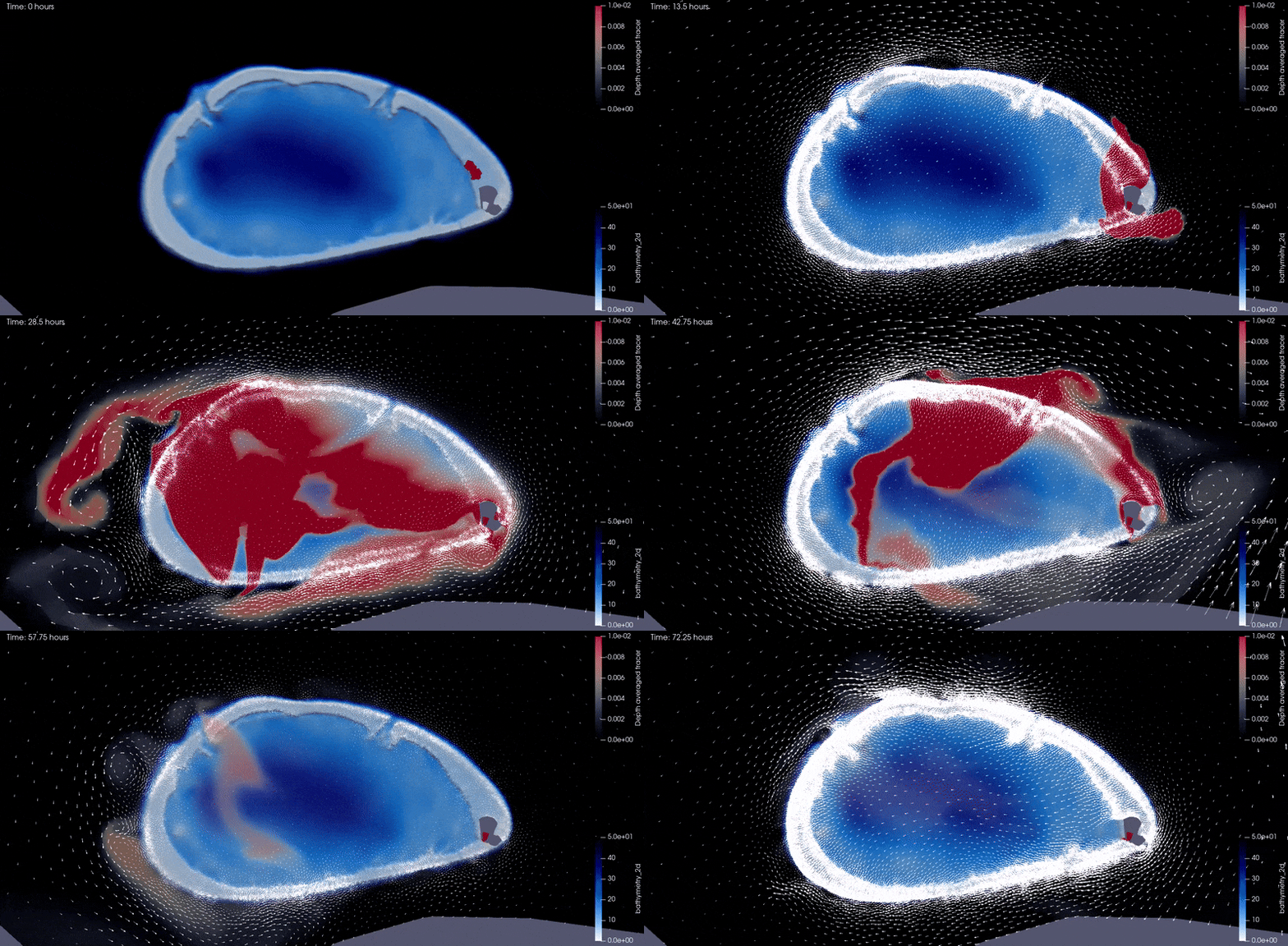
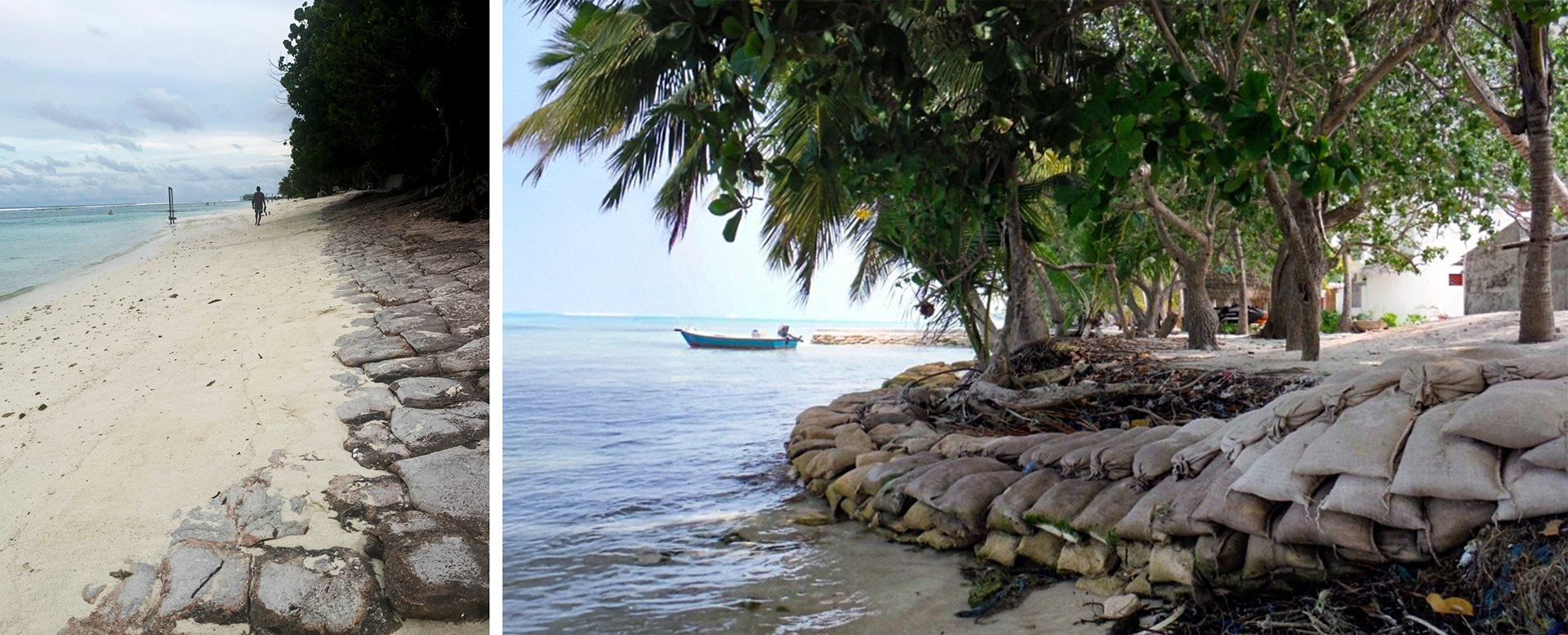
SHORE thing proposes a living, adaptive shoreline system designed for residential islands and local communities. Instead of resisting ocean dynamics, the system works with them by dissipating wave energy while retaining sand. It is low-cost, environmentally responsive, and fabricated using local materials with minimal imports, enabling community participation and long-term adaptability.
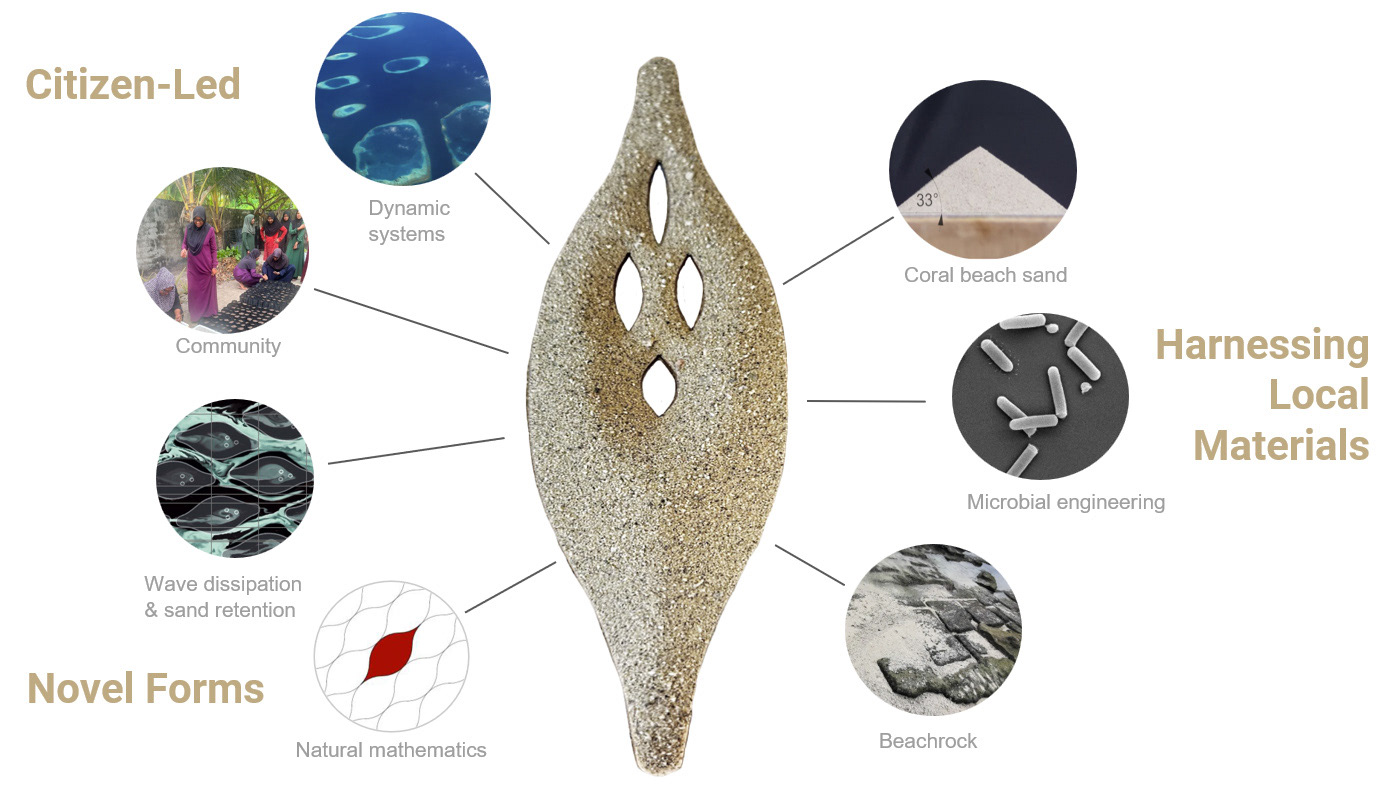
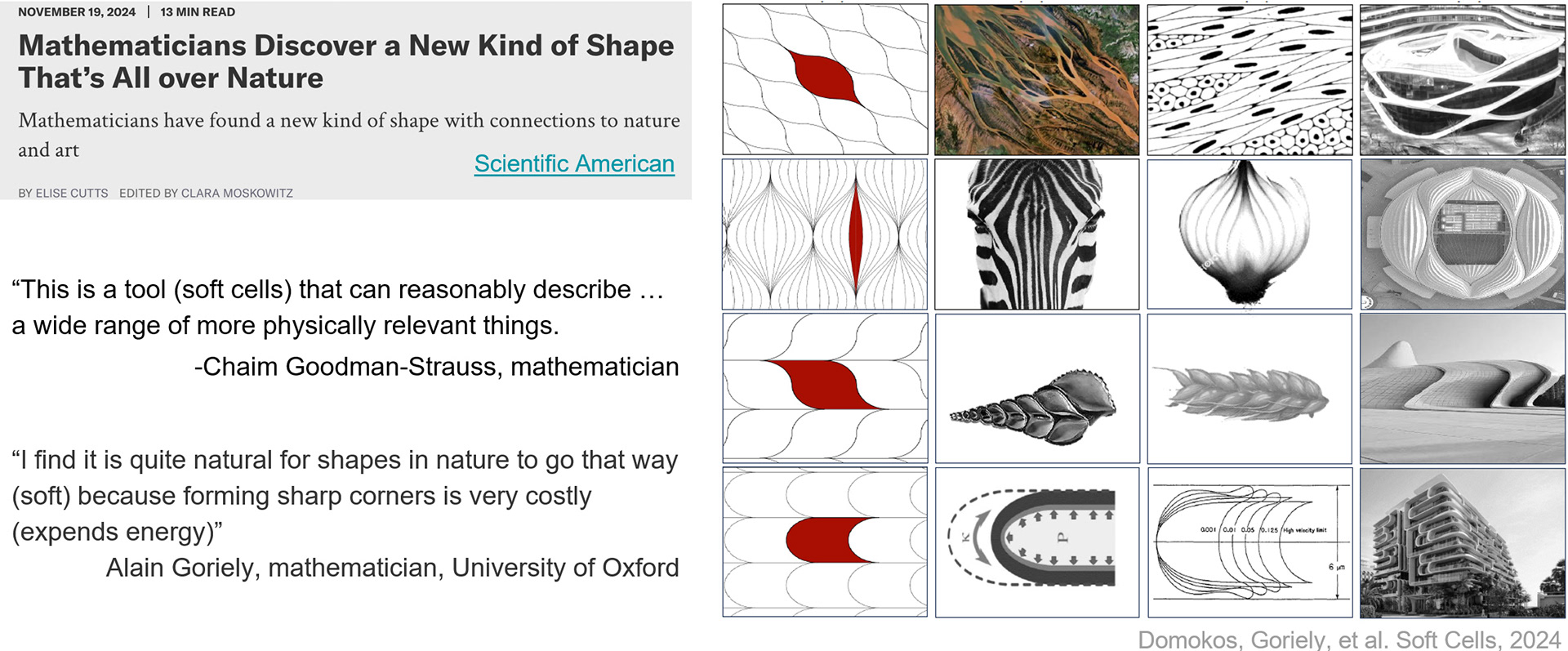
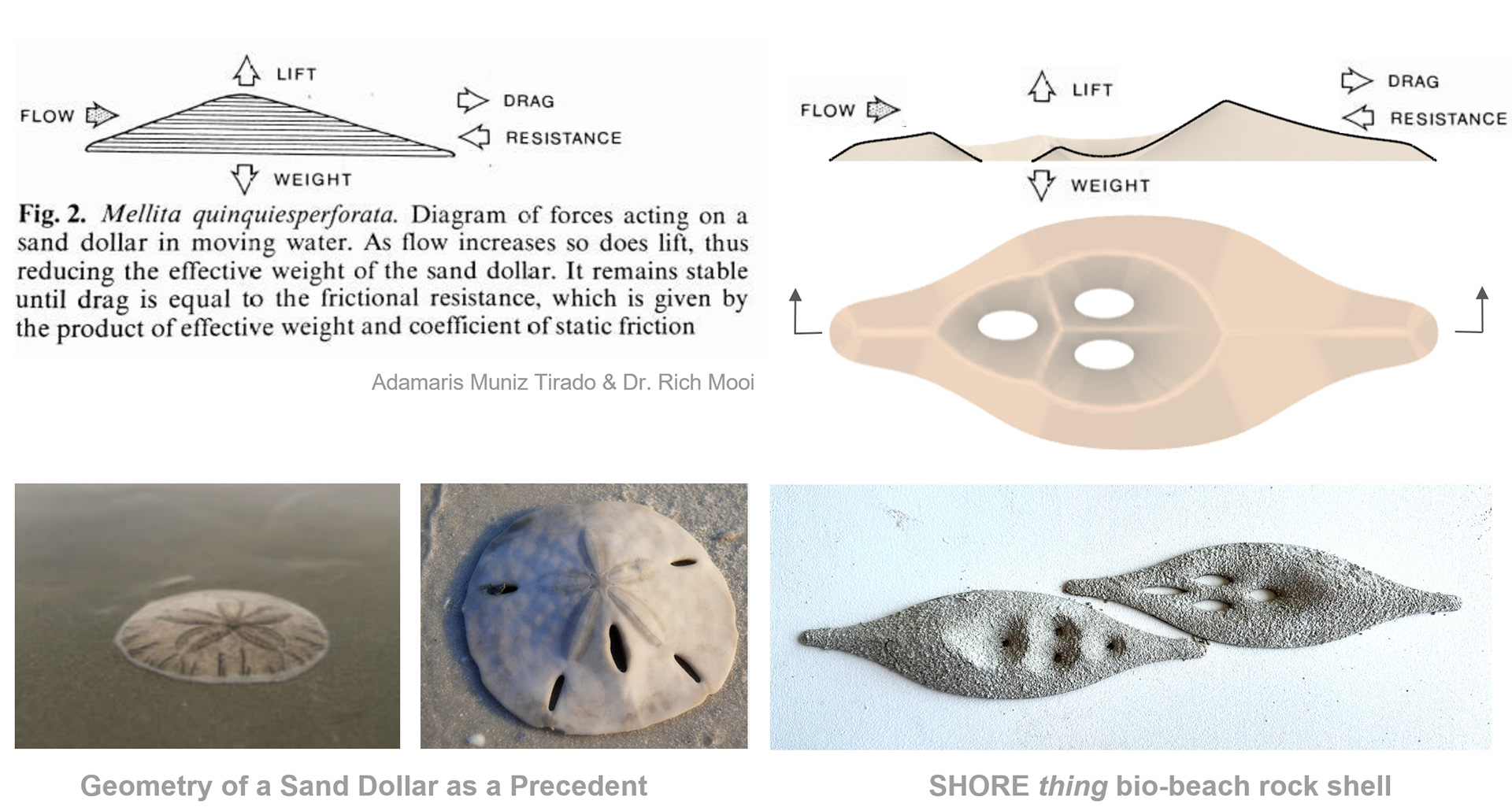
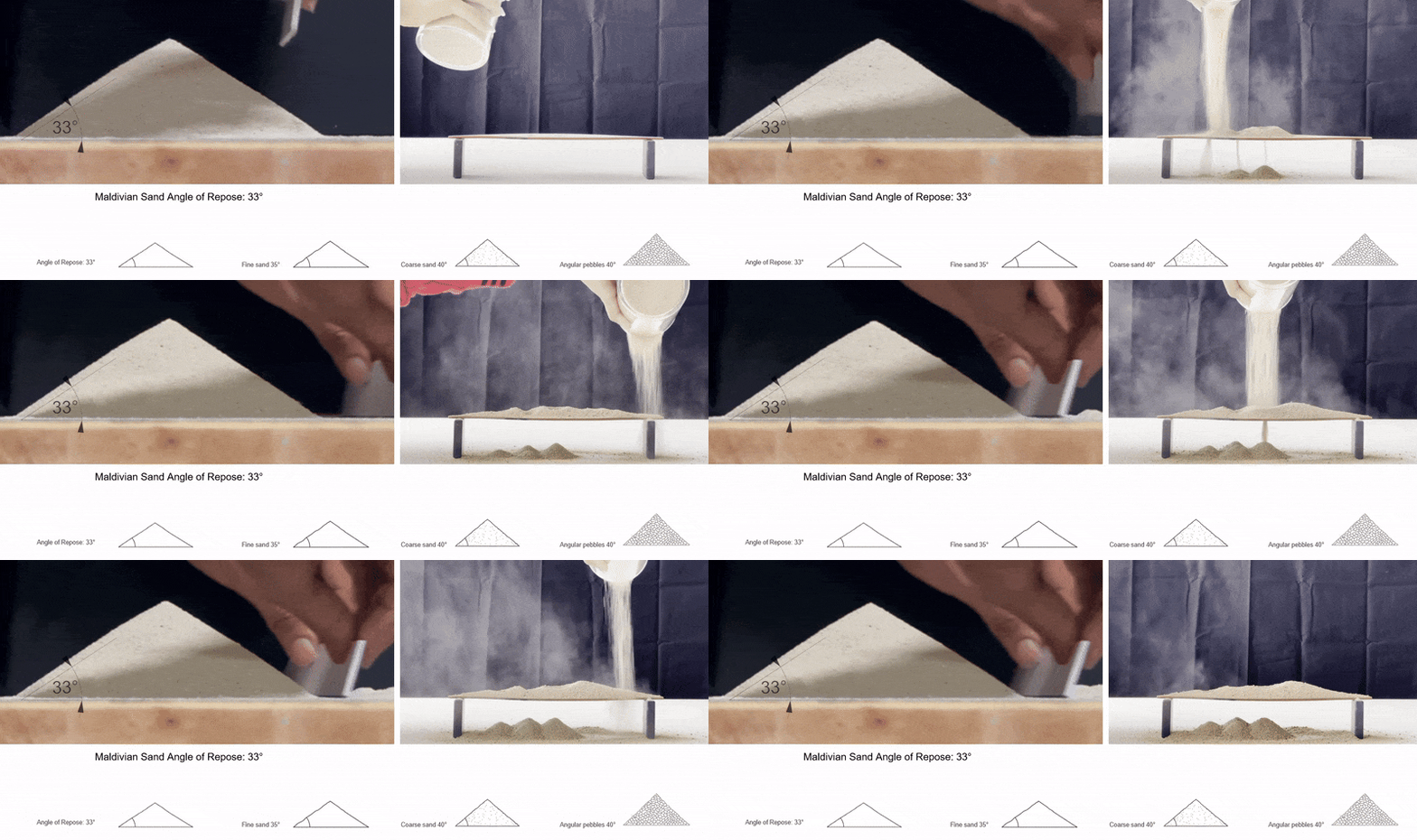
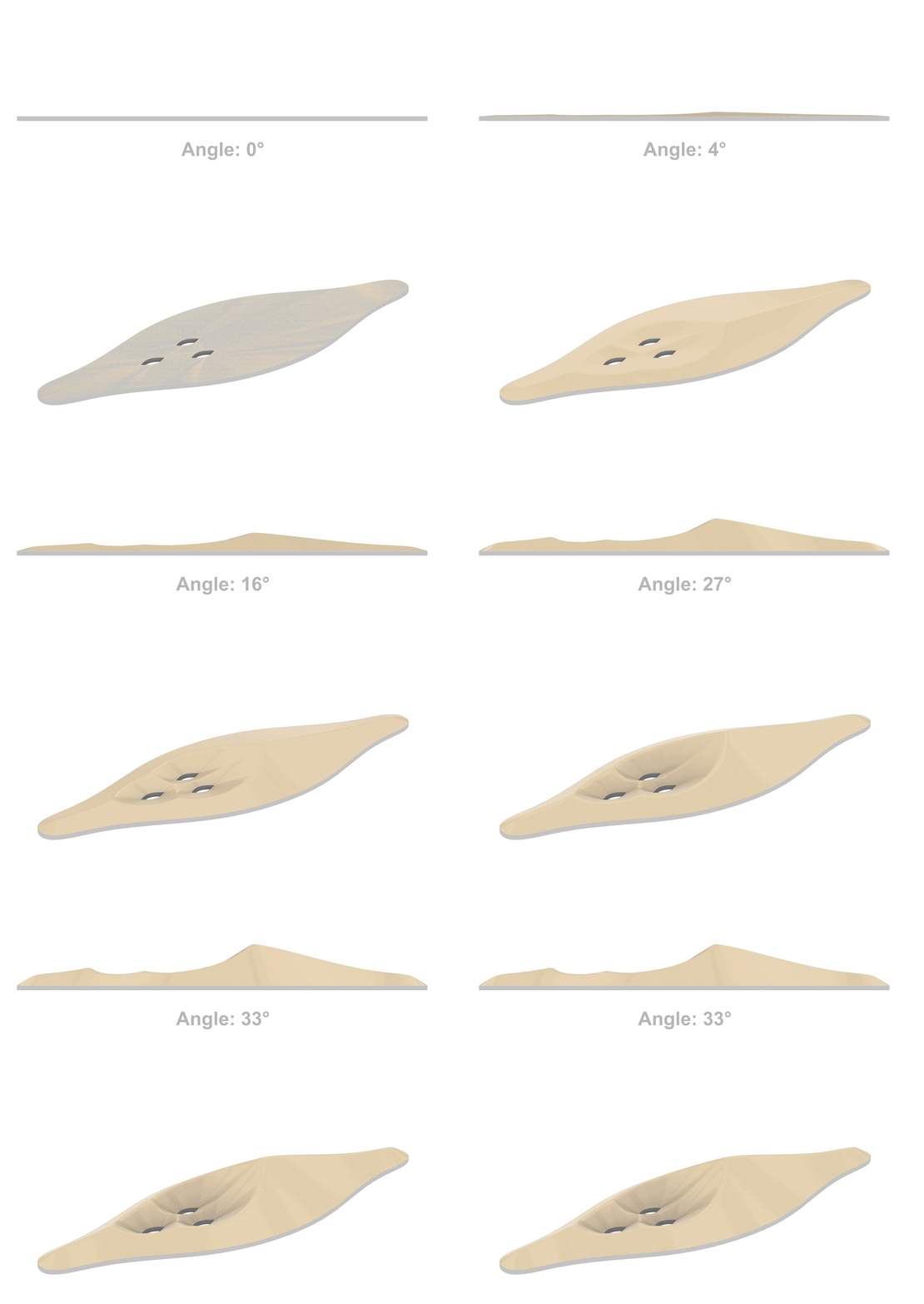
Formally, SHORE thing is inspired by biological systems such as sand dollars, which remain stable in high-energy wave environments. Its porous shell geometry allows water to pass through while slowing currents and capturing sediment. Modules are fabricated by shaping local sand along its natural angle of repose and selectively hardening the surface through layered mineral application.
Angle of Repose for Sand Casting:
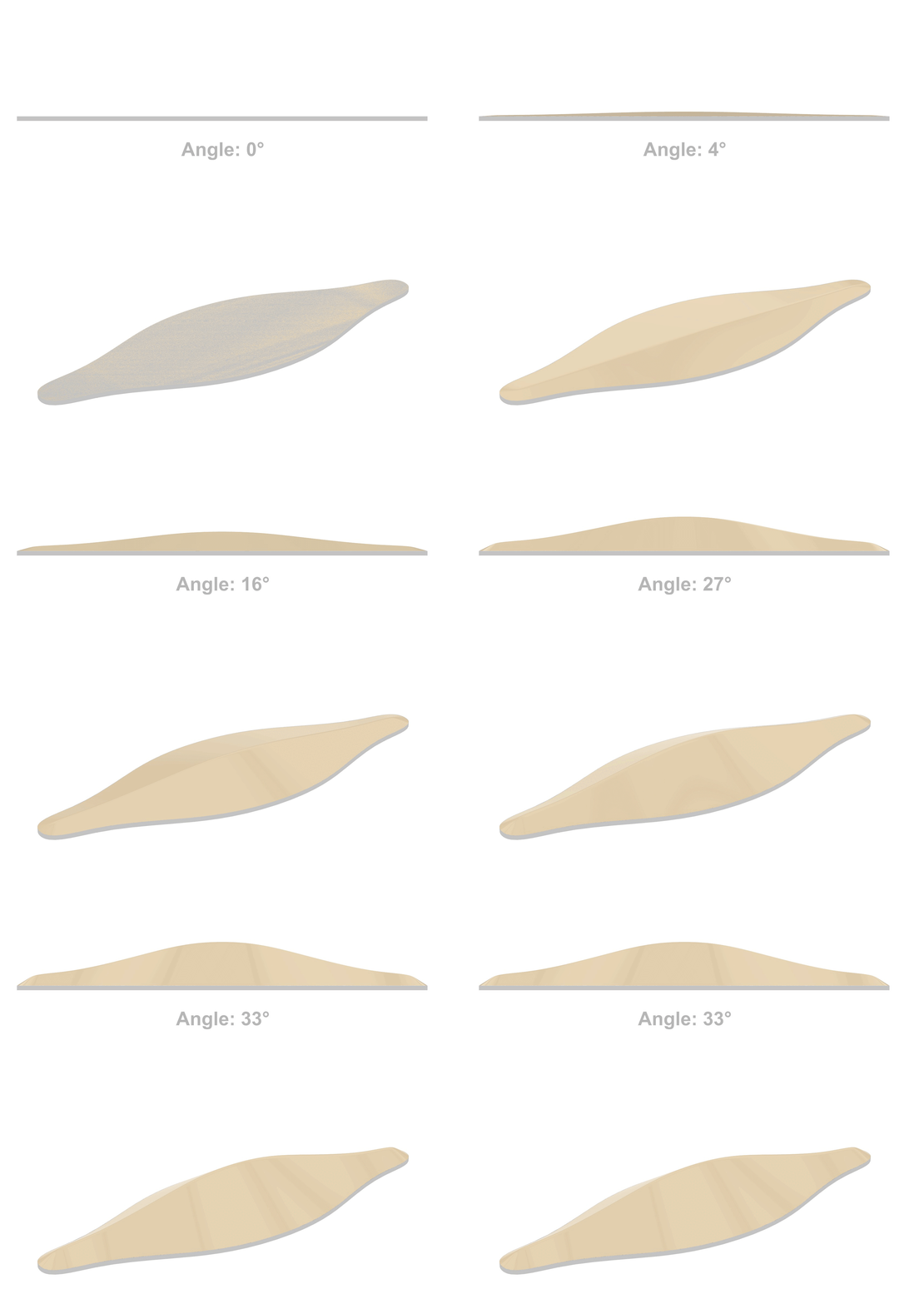
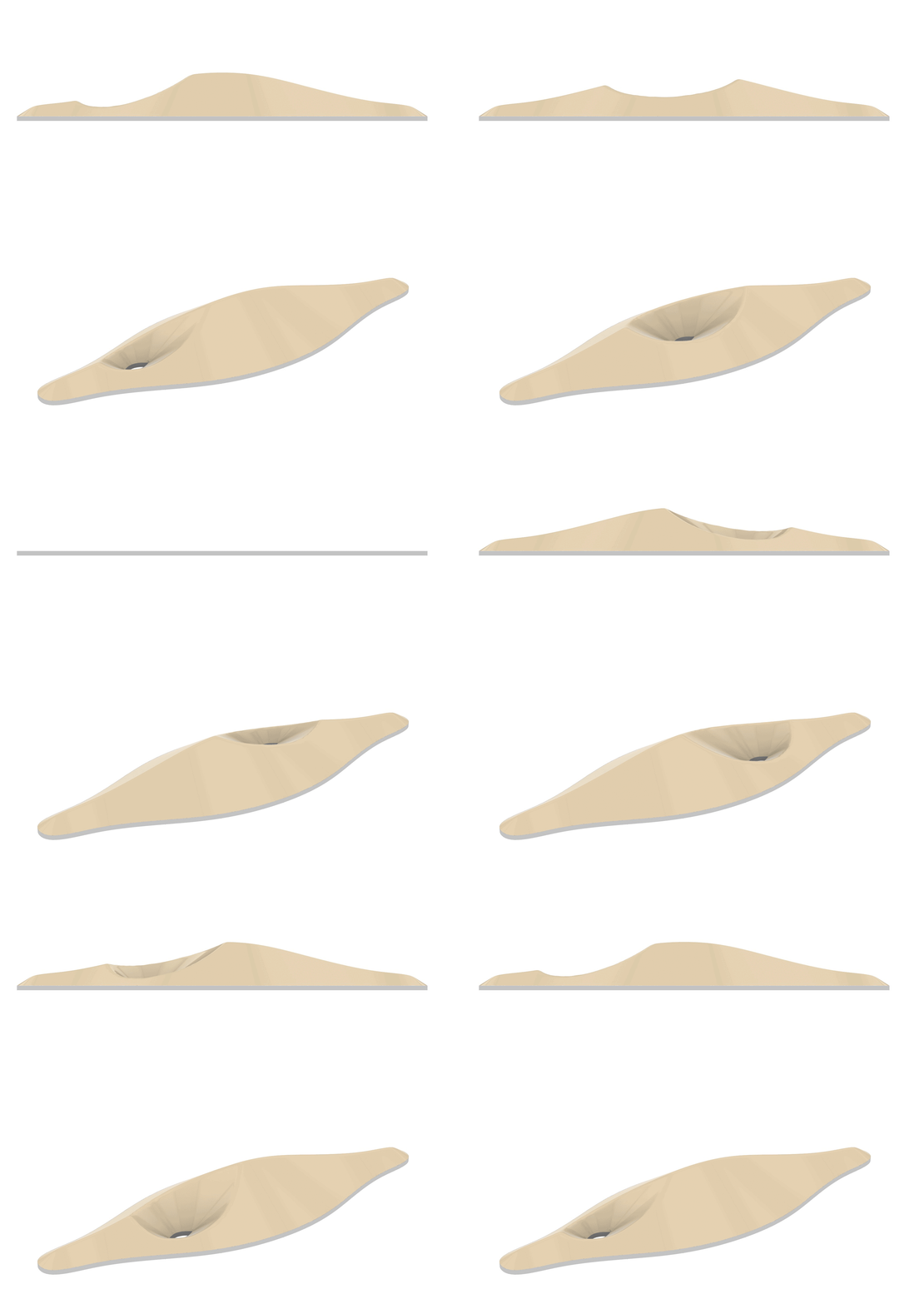
Hole placement exploration:
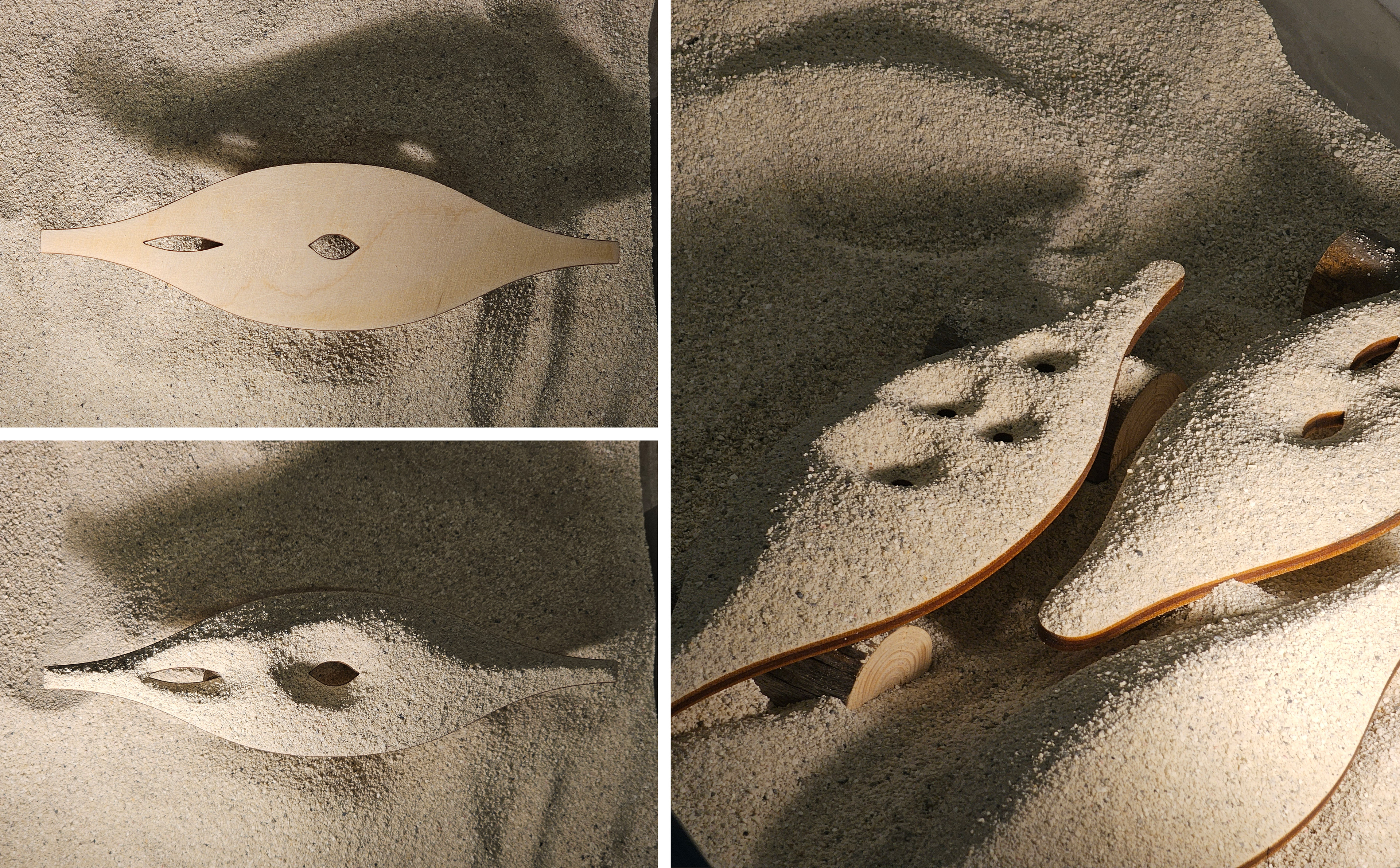
Sand Casting:
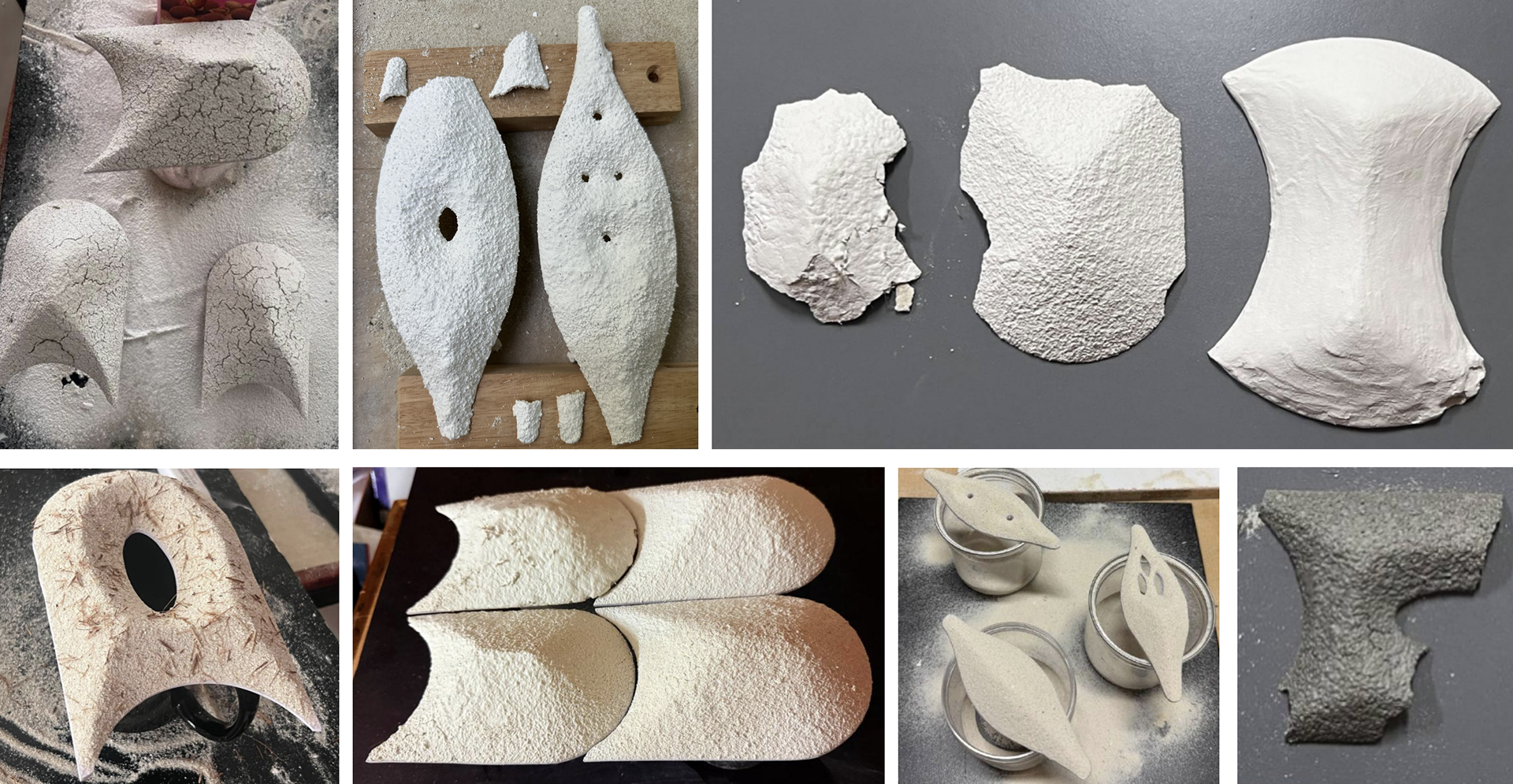
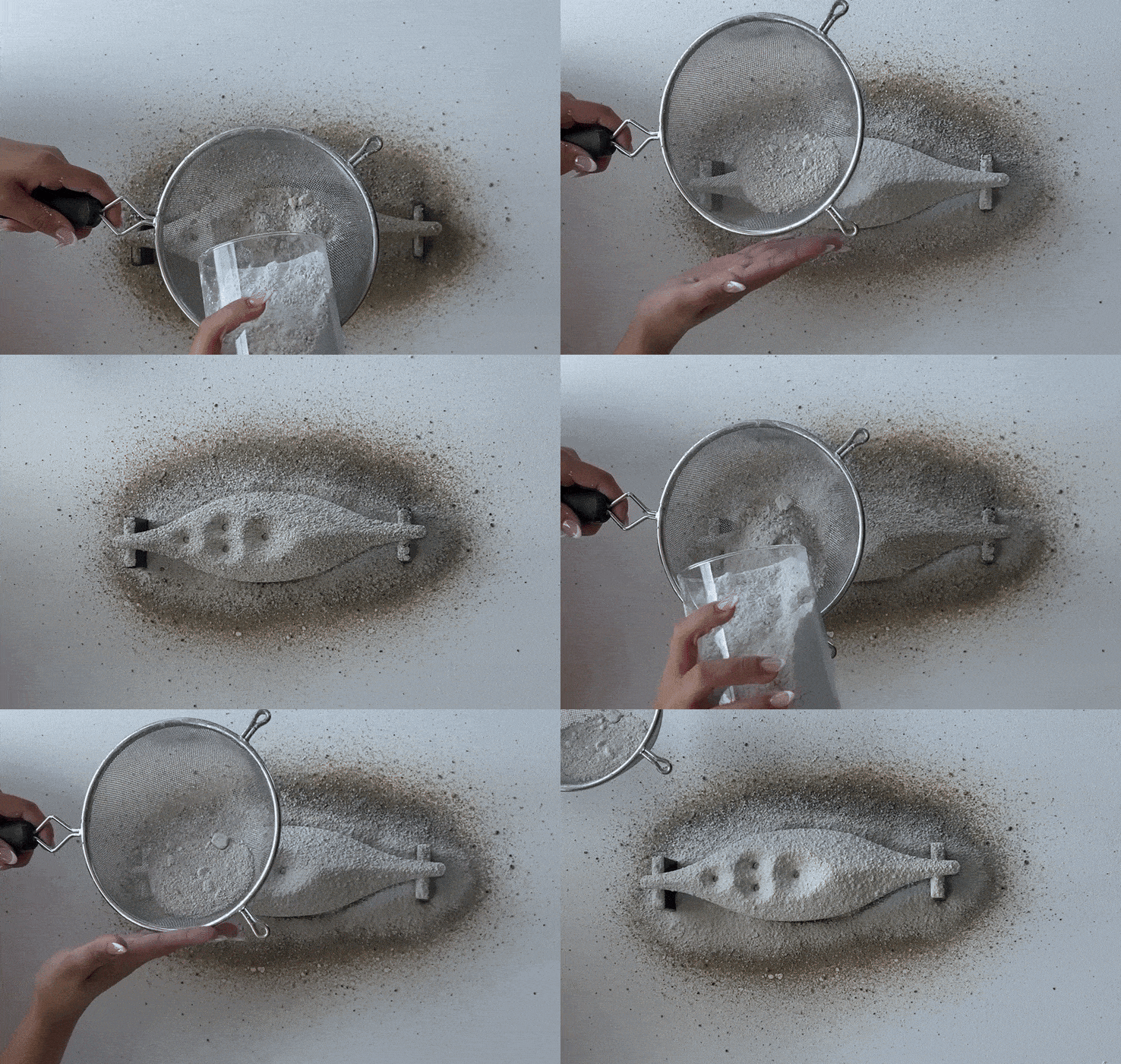
We made our first cast using a laser cut piece of wood and poured sand on top until it reached its angle of repose and then sifted hydraulic lime (a material made from calcium Carbonate) and were able to create a hardened shell after 4 layers of lime and sprayed water.
We made our first cast using a laser cut piece of wood and poured sand on top until it reached its angle of repose and then sifted hydraulic lime (a material made from calcium Carbonate) and were able to create a hardened shell after 4 layers of lime and sprayed water.
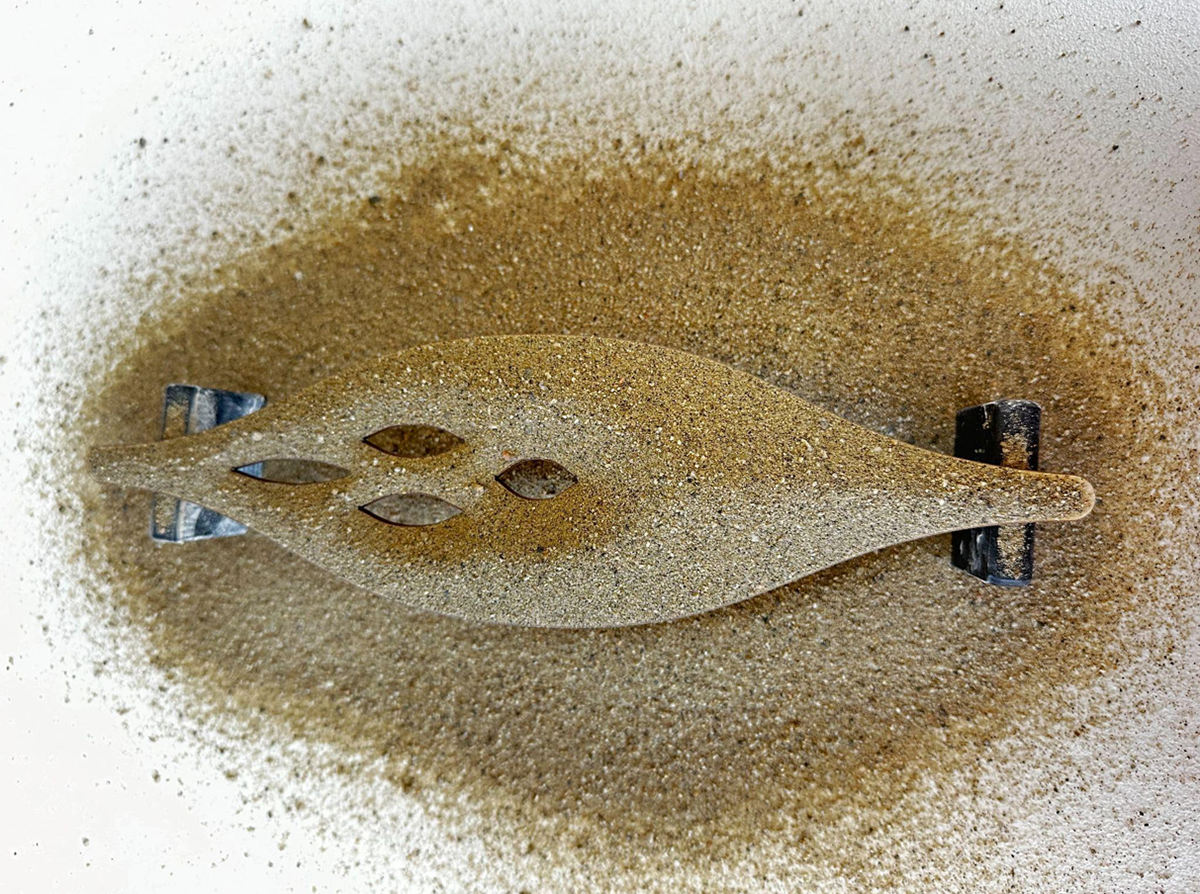
Some of the early failures, such as cracking during hardening, helped us improve our layering techniques—leading to the integration of fibers into the process. While the initial design performed well as a digital and 3D-printed model, fabricating it as a physical shell revealed that the tips were too fragile. We addressed this by adjusting the geometry in the next iteration.